
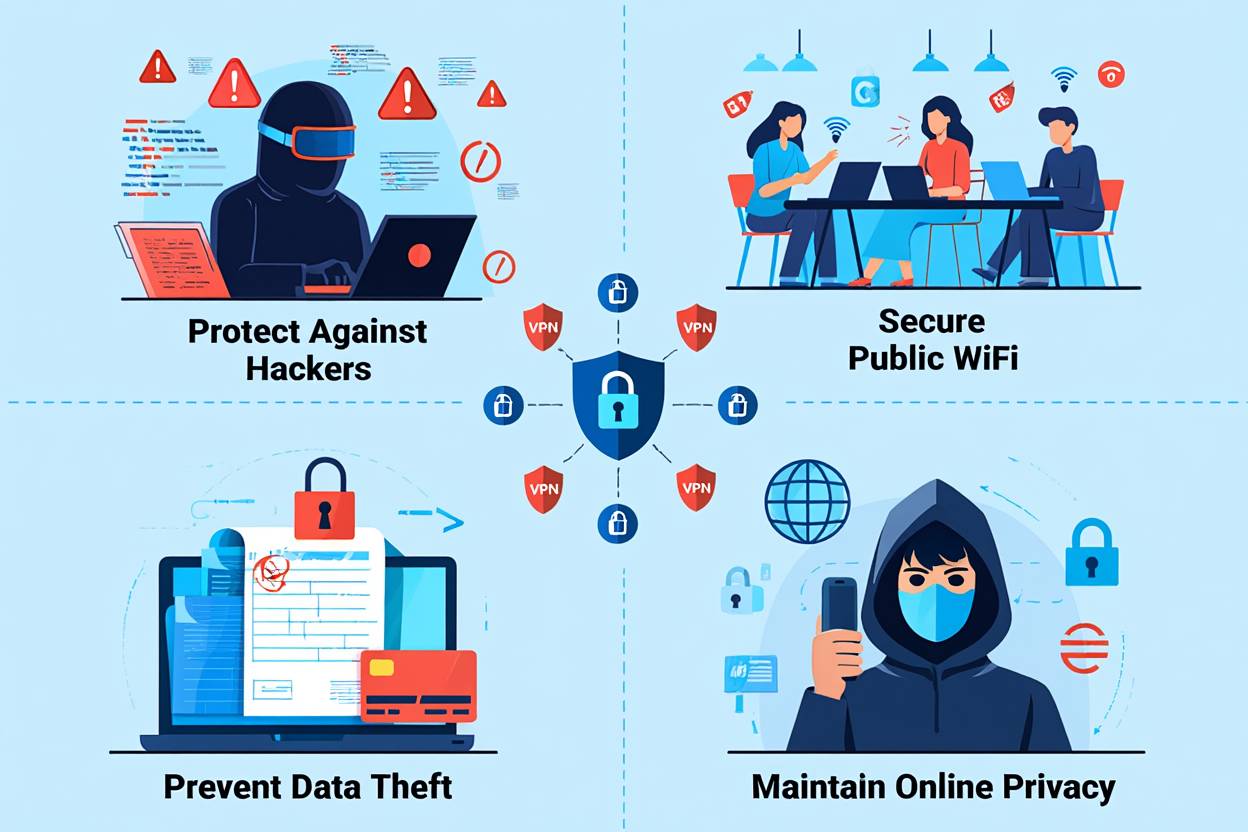
In today’s digital age, you might wonder about the security of your online data. The strength of VPN encryption plays a vital role in protecting your personal information and browsing activities from prying eyes. Understanding how robust this encryption is can significantly enhance your online security, ensuring your data remains private and safe.
VPN, or Virtual Private Network, acts as a secure tunnel between your device and the internet. When you transmit data through a VPN, it gets encrypted, which means it is converted into a coded format. This coded format prevents anyone who intercepts your data from understanding its contents. So, how strong is VPN encryption really?
Most VPNs use several encryption protocols. These protocols dictate how data is encrypted and transmitted. Here are some common encryption protocols and their strengths:
- OpenVPN: This is one of the most widely used protocols due to its strength and flexibility. It uses 256-bit AES encryption, which is considered very secure and is used by banks and governments.
- L2TP/IPsec: This combines Layer 2 Tunneling Protocol with IPsec for encryption. It’s quite strong, but the encryption method can sometimes be slower than OpenVPN.
- IKEv2/IPsec: This is another strong option, particularly suitable for mobile devices as it quickly reconnects after a lost connection. It also uses 256-bit AES encryption.
- PPTP: While this protocol is faster, it is not as secure as the others. Its encryption strength is only 128-bit, making it less effective against potential attacks.
The encryption strength is measured in bits. The higher the bit number, the tougher it is for hackers to decrypt your data. For example, a 256-bit encryption can take billions of years to crack, making it exceptionally secure. In comparison, lower bit numbers offer less security, meaning your data is more vulnerable to interception.
Another essential aspect to consider is the key length. A longer key means a more complex encryption algorithm, hence more robust security. This is critical when you’re using a VPN to access sensitive information like bank accounts or confidential work documents. Having a strong encryption standard can mean the difference between keeping your data safe and becoming a target for cybercriminals.
VPN encryption is particularly important when using public Wi-Fi networks. Public Wi-Fi is notorious for being less secure, making it easier for hackers to eavesdrop on your online activities. When you connect to a public network without a VPN, your data can be easily intercepted. However, with a strong VPN encryption in place, you can safeguard your personal information, even in these vulnerable environments.
It’s not just privacy that VPN encryption offers. It also allows you to bypass geographic restrictions, providing access to content that may not be available in your region. By encrypting your data, it masks your IP address, making it appear as if you’re located in a different country. This can enhance your internet experience by allowing you to access global content securely.
However, while strong encryption is a crucial factor, the reliability of the VPN provider also matters. Make sure to choose a reputable VPN service that prioritizes data security. Look for features such as a no-logs policy, kill switch, and strong encryption standards. These features will help ensure that your online activities remain anonymous and protected.
In the constantly evolving landscape of cyber threats, using a VPN with powerful encryption is no longer just an option; it’s essential. Secure your online presence and protect your data from unauthorized access, identity theft, and other malicious activities. Remember, the stronger the encryption, the better your protection. Make informed choices and keep your digital life safe.
Comparing Different VPN Protocols and Their Impact on Encryption Strength
When it comes to VPNs, understanding the various protocols can be an essential step toward securing your online activity. Different VPN protocols offer varying levels of encryption strength, impacting your data security. Let’s delve into the most common protocols: OpenVPN, L2TP/IPsec, IKEv2/IPsec, PPTP, and SSTP. By comparing these protocols, we can grasp not only how strong VPN encryption is but also the overall effectiveness of each protocol.
OpenVPN
OpenVPN is widely regarded as one of the most secure and versatile VPN protocols available today. It employs high-level encryption standards, typically using AES (Advanced Encryption Standard) with 256-bit keys. This level of encryption is considered unbreakable, making OpenVPN an excellent choice for those looking to protect sensitive information.
Additionally, OpenVPN supports multiple configurations and can run on various ports, which enhances its ability to bypass firewalls. This makes it both powerful and adaptable, ensuring that your data remains encrypted, regardless of the network you’re connected to.
L2TP/IPsec
Layer 2 Tunneling Protocol (L2TP) is often combined with IPsec for encryption. This combination provides a robust solution for secure tunneling. While L2TP itself does not encrypt data, when paired with IPsec, it delivers a strong level of encryption with 256-bit keys. However, L2TP/IPsec can be slower than OpenVPN because it operates over UDP (User Datagram Protocol), which can lead to higher latency.
Another consideration is that L2TP/IPsec may face restrictions in some regions, as it uses fixed ports, making it detectable by firewalls. Still, the encryption strength offered is quite satisfactory for most users seeking an extra layer of security.
IKEv2/IPsec
Internet Key Exchange version 2 (IKEv2), also paired with IPsec, is known for its speed and stability. This protocol is particularly good for mobile devices as it can quickly reconnect after losing an internet connection. Like L2TP/IPsec, it also offers strong encryption using AES with 256-bit keys.
One of the advantages of IKEv2/IPsec is its ability to negotiate encryption levels dynamically, allowing for even better performance under varying conditions. Its strong encryption and resilience make it a popular choice among users who prioritize both security and convenience.
PPTP
Point-to-Point Tunneling Protocol (PPTP) is one of the oldest VPN protocols available. Unfortunately, its age comes with drawbacks. While it is easy to set up and offers decent speeds, its encryption strength falls short compared to newer protocols. PPTP uses a 128-bit encryption standard that can be cracked within hours by sophisticated hackers.
Due to its weak security, PPTP is not recommended for sensitive tasks or when high-level encryption is crucial. Instead, it may be suitable for casual browsing where security is less of a concern.
SSTP
Secure Socket Tunneling Protocol (SSTP) is a protocol created by Microsoft that offers a high level of security. It uses SSL/TLS for encryption, allowing for secure data transmission. SSTP is particularly effective in environments where other protocols might be blocked, as it operates over HTTPS (port 443), making it less detectable.
The encryption strength is comparable to OpenVPN, providing strong 256-bit AES encryption. However, its primary limitation lies in compatibility; it primarily works on Windows devices, which can restrict its use for those on other platforms.
Comparative Insight on VPN Protocols:
- OpenVPN: Highly secure with 256-bit AES encryption; versatile and adaptable to different networks.
- L2TP/IPsec: Offers strong encryption but can be slower and less adaptable to firewalls.
- IKEv2/IPsec: Quick reconnection and strong security make it ideal for mobile users.
- PPTP: Easy to set up but weak security; not recommended for sensitive data.
- SSTP: Strong security with SSL/TLS but limited to Windows devices.
When choosing a VPN protocol, consider both your security requirements and your device compatibility. The strength of VPN encryption is paramount in safeguarding your personal information while browsing the internet. Understanding these protocols helps you make informed decisions to protect your data effectively.
Conclusion
The security of your online activities is significantly bolstered by VPN encryption, which acts as a shield, protecting your personal data from prying eyes. Understanding its strength and importance is crucial in today’s digital age, where cyber threats are omnipresent. VPNs not only obscure your IP address but also make your data nearly unreadable to potential attackers, providing peace of mind when browsing, especially on unsecured networks.
When exploring VPN options, it’s vital to compare different protocols like OpenVPN, L2TP/IPsec, and WireGuard. Each of these protocols has its own strengths and weaknesses in terms of encryption. For example, OpenVPN is widely respected for its robust security features and flexibility, while WireGuard offers impressive speed and efficiency. Knowing the differences helps you choose a VPN service that aligns with your specific needs, whether you’re looking for speed for streaming or enhanced security for sensitive communications.
Ultimately, when choosing a VPN, prioritize those that utilize strong encryption protocols. This ensures you can confidently engage in online activities without the constant fear of data breaches or privacy infringements. Remember, a VPN is only as strong as its encryption; thus, selecting a reliable provider with proven technology not only enhances your online safety but also empowers you in navigating the vast digital landscape. Your online privacy is an investment worth making, and VPN encryption is a crucial part of that security.
You May Also Like
 VPNs & Proxies
Is It Safe To Use A Free VPN? The Risks and Benefits
 VPNs & Proxies
VPN Encryption Explained: How It Works, Protocols, and What It Protects
 VPNs & Proxies
Can a VPN Steal Your Data? Understanding the Risks and Misconceptions
 VPNs & Proxies
Does a VPN Drain Battery? What You Need to Know Based on a Little Experience
 VPNs & Proxies
Should You Leave Your VPN On All the Time?
 VPNs & Proxies