

Xfinity Mobile can be a good value if you already have eligible Xfinity Internet and get reliable coverage where you use your phone. At regular rates, Mobile Select costs $30 per line per month, while Mobile Plus costs $45. Both plans include unlimited talk, text, and data, along with international roaming in eligible destinations and access to Xfinity WiFi hotspots.
Of course, the right price doesn’t tell the whole story. Xfinity Internet is required when you sign up, and the advertised mobile prices include an internet customer discount. Your experience will also depend on your phone, local coverage, and network traffic.
For many customers, Mobile Select is the better place to start. It costs less and includes 50 GB of premium cellular data. If you regularly use your phone as a hotspot or want the included device protection, Mobile Plus may be worth the extra cost.
- Choose Xfinity Mobile if: You plan to keep eligible Xfinity Internet and the coverage, price, and features fit your needs.
- Compare other carriers if: You want a mobile plan independent of your home internet, need different hotspot benefits, or find a better overall deal elsewhere.
Plan details and prices were checked on November 3, 2026. Offers, availability, and terms can change.
Xfinity Mobile at a Glance
| Category | What to know |
|---|---|
| Regular starting price | $30 per month per line for Mobile Select |
| Current phone plans | Mobile Select and Mobile Plus |
| Cellular network | Primarily Verizon’s network, with limited Comcast-owned wireless resources in some areas |
| Premium cellular data | 50 GB on Select; unlimited on Plus |
| High-speed hotspot data | 15 GB on Select; 50 GB on Plus |
| International roaming | Included in more than 215 eligible destinations, subject to terms |
| Internet requirement | Xfinity Internet is required at sign-up |
| Best fit | People who already have eligible Xfinity Internet and intend to keep it |
| Main drawback | Advertised pricing includes an internet customer discount |
| Availability note | Mobile Plus is not available in New York State |
The prices above include Xfinity’s internet customer discount. Taxes, fees, device payments, and optional services may cost extra. Promotions and availability can vary.
What Is Xfinity Mobile?
Xfinity Mobile is Comcast’s wireless phone service. It primarily uses Verizon’s cellular network and gives customers access to millions of Xfinity WiFi hotspots.
When your phone isn’t connected to WiFi, it uses the available cellular network. An eligible device may also connect to a supported Xfinity hotspot. In some limited areas, Comcast uses its own wireless spectrum for certain devices. Xfinity Mobile Broadband Disclosures
The important detail is the connection to your home internet account. You need Xfinity Internet when you sign up, and the advertised mobile prices include an internet customer discount.
If you later decide to cancel your home internet, you can generally keep your mobile service. On the latest pricing plan, though, Xfinity says it will remove the $10 monthly Multi-Product Discount. Older plans have different rules, so it’s worth checking your account before making a change.
Xfinity Mobile Plans and Pricing
Xfinity introduced Mobile Select and Mobile Plus in April 2026. Some existing customers may still have the older By the Gig option, but it is not part of the latest pricing plan.
Here’s how the two current phone plans compare.
| Feature | Mobile Select | Mobile Plus |
|---|---|---|
| Regular monthly price | $30 per line | $45 per line |
| US talk, text, and data | Unlimited | Unlimited |
| Premium cellular data | 50 GB per line, per billing cycle | Unlimited |
| Personal hotspot | 15 GB at high speed, then reduced speeds | 50 GB at high speed, then reduced speeds |
| Cellular video | Up to 720p | Up to 4K |
| International roaming | Included in eligible destinations | Included in eligible destinations |
| WiFi PowerBoost | Included for eligible devices and connections | Included for eligible devices and connections |
| Device protection | Optional; additional cost | Xfinity Mobile Care Plus included, subject to terms |
| Phone upgrades | Standard purchase options | Upgrade Anytime for eligible customers |
| Xfinity Call Guard | Not listed as a Select benefit | Included |
Prices shown are regular monthly rates with the internet customer discount. Taxes, fees, device payments, and optional services may cost extra. Mobile Plus is not available in New York State.
One detail that’s easy to miss: Xfinity says video streaming defaults to 480p on these plans. You’ll need to enable the higher-quality setting through your account. Your device and streaming service also need to support the quality you want.
Are There First-Year Promotions?
At the time of our check, Xfinity advertised one Mobile Select line at $0 per month for the first year, or Mobile Plus at $15 per month for the first year, for qualifying new Xfinity Mobile customers.
That said, the offer has restrictions. It requires eligible residential post-pay Xfinity Internet at 300 Mbps or above, is not available in every area, and is limited to a discount equal to the value of one Select line. After the promotional period, the displayed regular prices are $30 and $45 per line, respectively, with Xfinity Internet.
If you’re moving several lines, don’t assume the first-year discount applies to all of them. Check the offer shown for your address and account.
Mobile Select: A Practical Choice for Most Everyday Use
Mobile Select costs $30 per line at the regular rate. It includes unlimited data, with 50 GB of premium cellular data per billing cycle, plus 15 GB of high-speed personal hotspot use.
If a line uses more than 50 GB, the data doesn’t stop. Instead, Xfinity says it may be slower than other traffic when the network is congested. After 15 GB of hotspot use, the hotspot continues at reduced, 3G speeds. Xfinity plan details
For many people, Select will be enough. If you spend much of your time on home or work WiFi, use your hotspot occasionally, and don’t need the extra protection benefits, it’s a sensible place to start.
Mobile Plus: Better for More Demanding Hotspot Use
Mobile Plus costs $45 per line at the regular rate. It includes unlimited premium cellular data and 50 GB of high-speed hotspot use, along with video up to 4K, device protection, and eligible upgrade benefits.
If you regularly connect a laptop to your phone while traveling or working away from home, that larger hotspot allowance may be useful. The included protection may also have value if you would otherwise buy similar coverage.
There are conditions, though. Device protection can have eligibility requirements, coverage limits, service fees, or deductibles. If you bring your own phone, check its eligibility and any applicable waiting period.
The Upgrade Anytime benefit has its own rules. For example, eligible customers must buy the new phone on a device payment plan, and the discount is applied as credits over the payment term. Changing or canceling the qualifying plan can affect those credits.
Mobile Select or Mobile Plus: Which Should You Choose?
The easiest way to decide is to look at what you actually use—not just what sounds nice to have.
| If this sounds like you | Starting point | Why |
|---|---|---|
| You mostly use WiFi and rarely use a hotspot | Mobile Select | Its lower regular price may cover your needs. |
| You regularly need more than 15 GB of high-speed hotspot data | Mobile Plus | It includes 50 GB before hotspot speeds are reduced. |
| You want video up to 4K over cellular | Mobile Plus | Select supports up to 720p; settings and device compatibility still matter. |
| You frequently use more than 50 GB of cellular data | Compare both | Plus avoids Select’s 50 GB congestion threshold, but local performance still varies. |
| You would otherwise buy device protection | Compare both | Check the coverage, deductibles, device eligibility, and claim terms. |
| You live in New York State | Check available options | Xfinity says Mobile Plus is not available there. |
Is Mobile Plus Worth an Extra $15 a Month?
At regular rates, Mobile Plus costs $15 more per line each month than Mobile Select. Here’s what that difference looks like over a year.
| Lines | Select per year | Plus per year | Annual difference |
|---|---|---|---|
| 1 | $360 | $540 | $180 |
| 2 | $720 | $1,080 | $360 |
| 4 | $1,440 | $2,160 | $720 |
These are calculated regular plan prices for a full year. They exclude promotions, taxes, fees, device payments, and optional services.
For one person, the question is whether the extra hotspot data and other Plus benefits are worth $180 more per year. For a household with four lines, the difference grows to $720. That doesn’t mean everyone needs the same plan: one person may benefit from Plus while another is comfortable with Select.
Is Xfinity Mobile Coverage Reliable?
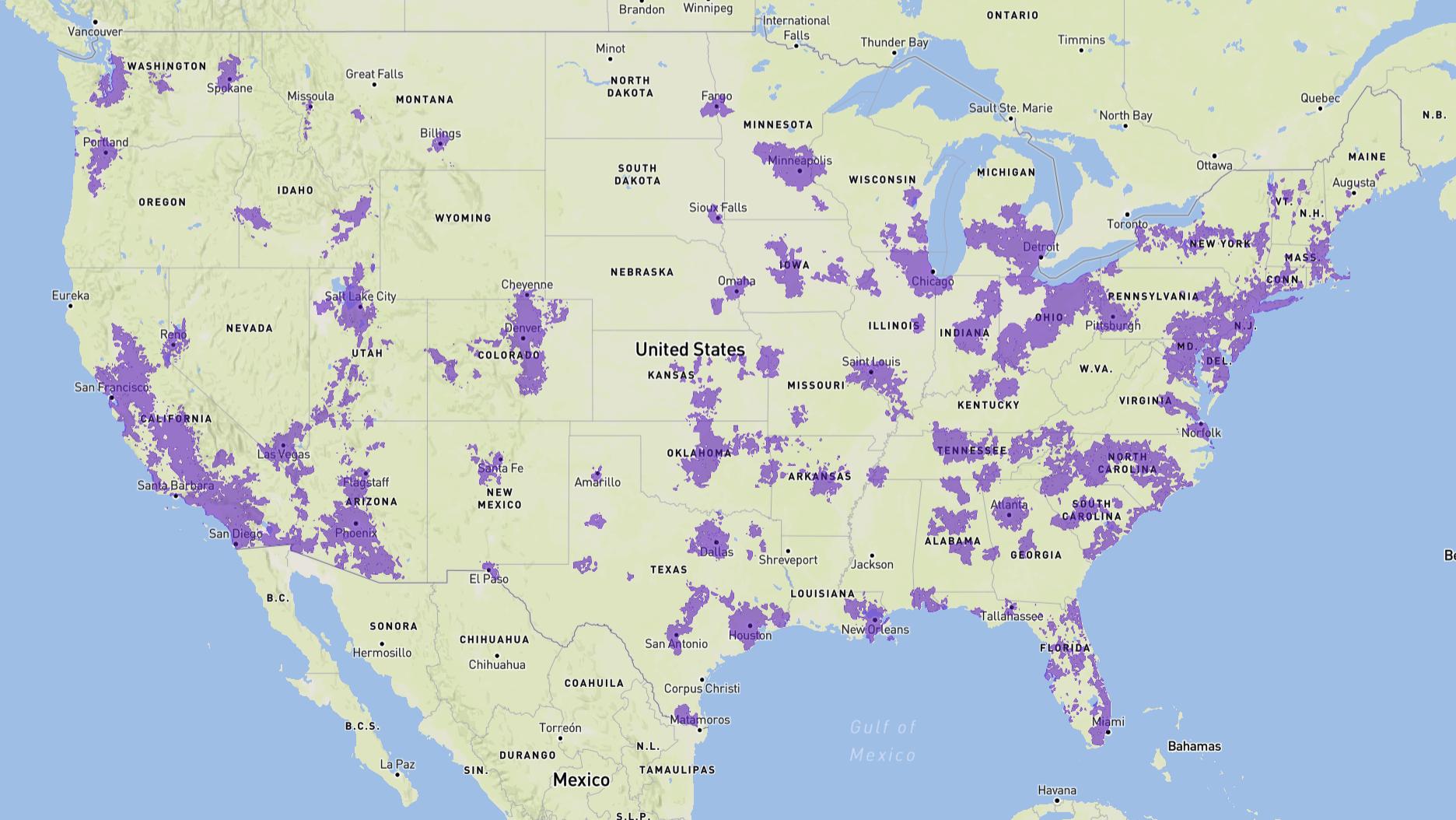
Xfinity Mobile uses Verizon’s cellular network, giving it access to broad LTE and 5G coverage. But broad coverage doesn’t mean every location will work equally well.
A phone that gets a strong signal outside may struggle in a basement, office building, or apartment. Terrain, building materials, network traffic, and your phone’s supported bands can all make a difference.
Before you switch, check the Xfinity Mobile coverage map for:
- Your home and workplace
- Your school or college
- Your usual commute
- Medical facilities you visit
- Places where you travel regularly
If you can, ask nearby Xfinity Mobile or Verizon users about their experience indoors. A national map is useful, but a neighbor’s experience may give you a better idea of what to expect in your building.
Also remember that using the same network infrastructure doesn’t guarantee the same experience as every Verizon plan. Data rules, device support, WiFi connections, and customer service can differ.
How to Test Xfinity Mobile After Activation
Once your service is active, try it during your normal routine rather than relying on a single speed test.
- Choose a few important locations. Test at home, at work or school, and along a route you travel often.
- Turn off WiFi temporarily. That way, you’re testing the cellular network rather than a hotspot.
- Try different times of day. Include a busy period, such as your evening commute.
- Make a call indoors. Pay attention to rooms where reliable reception matters.
- Stream a short video. Look for slow starts, buffering, or sudden drops in quality.
- Try your hotspot. Connect a laptop or tablet if you expect to use it regularly.
- Look for consistency. If you game or make video calls, repeated lag or dropped connections can matter more than one impressive speed result.
Before switching, review the cancellation and return terms that apply to your purchase. Xfinity’s satisfaction guarantee describes a 14-day return period for eligible devices, subject to its conditions.
How Fast Is Xfinity Mobile?
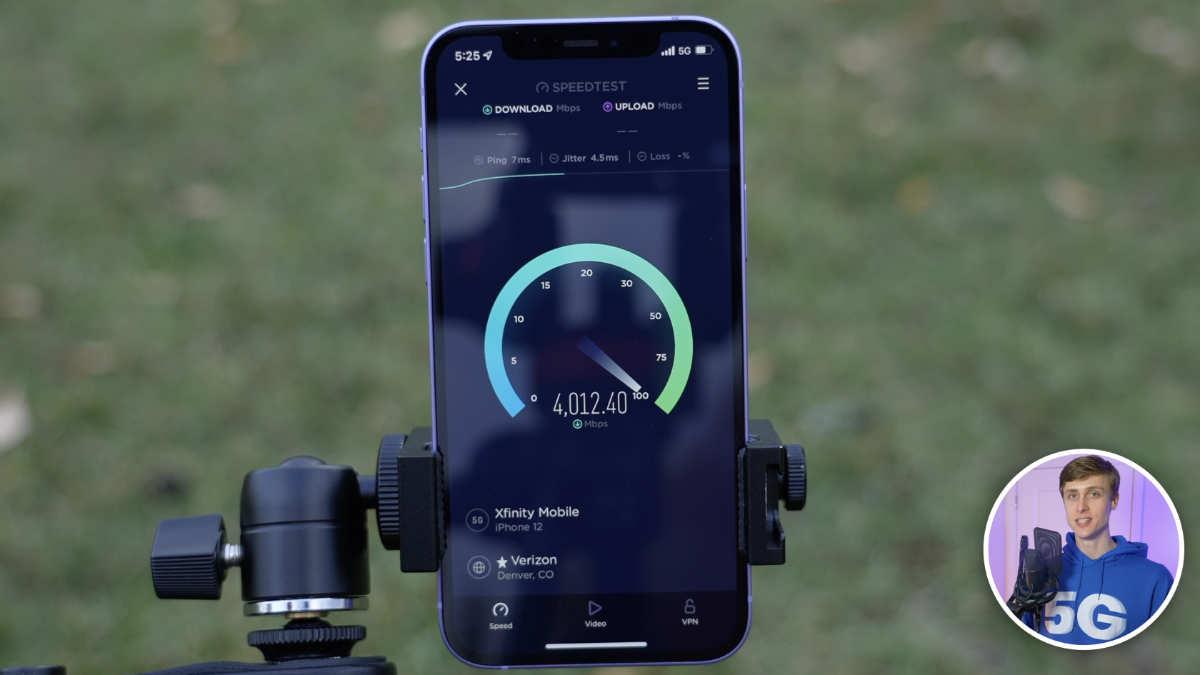
Xfinity Mobile can deliver different speeds depending on which network you’re connected to. Its fastest option is 5G Ultra Wideband, while standard 5G and 4G LTE offer lower speed ranges.
According to Xfinity, typical cellular performance falls within these ranges:
| Network Type | Download Speed | Upload Speed | Latency |
|---|---|---|---|
| 5G Ultra Wideband | 195–634 Mbps | 10–53 Mbps | 37–57 ms |
| 5G | 35–143 Mbps | 5–31 Mbps | 42–64 ms |
| 4G LTE | 11–75 Mbps | 1–13 Mbps | 49–75 ms |
These figures come from Xfinity, not independent speed tests conducted for this article. They’re useful as a general reference, but they don’t mean your phone will consistently reach those speeds. Your results can change depending on where you are, how strong your signal is, how busy the network is, and which phone you’re using.
What Does This Mean for Everyday Use?
You don’t need hundreds of Mbps to enjoy most mobile activities. Even a decent 4G LTE connection can handle everyday browsing, social media, music streaming, and many video calls.
The difference becomes more noticeable when you download large files, stream higher-quality video, or use your phone in areas with heavy network traffic. A strong 5G Ultra Wideband connection can make these activities feel faster, especially when downloading large apps or transferring files.
Online gaming is a little different. A high download speed doesn’t automatically mean a better gaming experience. Latency, connection stability, and sudden ping changes matter more when you’re playing multiplayer games.
If you’re considering Xfinity Mobile, don’t judge its performance by the highest number in the table alone. Check the coverage in places where you regularly use your phone, such as home, work, and your daily commute.
You can also run a few speed tests at different times of the day. Compare download speed, upload speed, and latency rather than relying on a single result. This gives you a more useful picture of how the service performs in your area.
The bottom line: Xfinity Mobile’s published speeds look promising, particularly for users with access to 5G Ultra Wideband. However, consistent coverage and reliable performance matter more than impressive peak speeds. A connection that works well throughout your day is ultimately more useful than one that reaches a high speed only occasionally.
What Is WiFi PowerBoost?
WiFi PowerBoost is an Xfinity Mobile benefit that can provide speeds of up to 1 Gbps on eligible Xfinity WiFi connections.
Think of it as a WiFi feature, not a way to make a cellular tower faster. At home, eligibility depends on factors such as your gateway, phone, and internet speed tier. Xfinity also offers the benefit on supported public hotspots. Actual speeds vary and aren’t guaranteed.
If your phone gets a fast result on WiFi, you shouldn’t expect the same result automatically when you leave home and switch to cellular data.
Is Xfinity Mobile Good for Streaming?

For many customers, a stable LTE or 5G connection can be enough for HD streaming. Whether it works well for you depends on the signal, network traffic, your plan settings, and the streaming service.
For reference, Netflix recommends:
- 3 Mbps for 720p
- 5 Mbps for 1080p
- 15 Mbps for 4K
Those recommendations are below Xfinity’s published typical 5G download ranges. That said, a speed range alone can’t guarantee smooth playback everywhere.
There’s also a difference between the plans: Mobile Select supports cellular video up to 720p, while Mobile Plus supports up to 4K. You need to enable the higher-quality setting in your Xfinity account, and your device and streaming subscription must support it.
If you’re planning a long trip, downloading shows over WiFi beforehand can be a smart move. Netflix says 4K viewing can use up to about 7 GB per hour, depending on the content and settings.
Is Xfinity Mobile Good for Gaming?

Xfinity Mobile can work well for casual and multiplayer gaming when the connection is stable. For competitive or cloud gaming, consistency becomes more important: a sudden lag spike can be more noticeable than a modest difference in download speed.
| Use | What to consider |
|---|---|
| Casual phone games | Usually less demanding, though weak reception can still interrupt online play. |
| Online multiplayer | Check how consistently the connection performs where and when you play. |
| Competitive gaming | Sudden latency spikes can matter more than maximum download speed. |
| Cloud gaming | A strong, steady connection is important, and data use can be substantial. |
| Console gaming through a hotspot | Useful as a backup, but downloads and updates can consume the high-speed allowance quickly. |
Xfinity’s published cellular latency ranges are approximately 26–75 ms across the network types in its disclosure. Your in-game ping may be different because the game server, routing, signal, and network conditions also affect it.
If you regularly play on a console or PC at home, a wired connection is often a more dependable option than a phone hotspot. The best test, of course, is to try the games you actually play in your usual locations.
How Does International Service Work?
If you travel occasionally, the included roaming benefit could be one of Xfinity Mobile’s more useful features. Mobile Select and Mobile Plus include talk, text, and data in more than 215 eligible destinations. Customers on these plans don’t need to buy the older daily Global Travel Pass for data in covered destinations.
You get 10 GB of high-speed international data per billing cycle. After that, Xfinity says speeds are reduced to up to 14 Mbps for the rest of the cycle. That’s a maximum, not a guaranteed speed.
Before you leave:
- Check your destination on Xfinity’s international coverage list.
- Make sure you know how to enable roaming on your phone.
- Review charges for destinations outside the included coverage.
- Check separate connectivity options for cruise ships and airplanes.
- If you’ll spend an extended period abroad, review Xfinity’s roaming and acceptable-use terms.
One distinction matters here: using your phone while traveling abroad is not the same as making an international call from the United States. Check the applicable calling rates before dialing an international number from home.
Xfinity Mobile Pros and Cons
| Pros | Cons |
|---|---|
| Regular plans start at $30 per line with the internet customer discount. | Xfinity Internet is required at sign-up. |
| Access to Verizon-based cellular coverage and Xfinity WiFi hotspots. | Coverage and hotspot availability vary by location. |
| International roaming is included in eligible destinations. | International high-speed data is limited to 10 GB per billing cycle before reduced speeds. |
| Both current plans include personal hotspot data. | Hotspot speeds are reduced after the plan allowance. |
| Plus includes device protection and eligible upgrade benefits. | Protection and upgrade benefits have conditions; Plus is unavailable in New York State. |
| Regular per-line pricing is straightforward to estimate. | Another carrier may offer better total pricing for your household. |
How Does Xfinity Mobile Compare With Other Carriers?
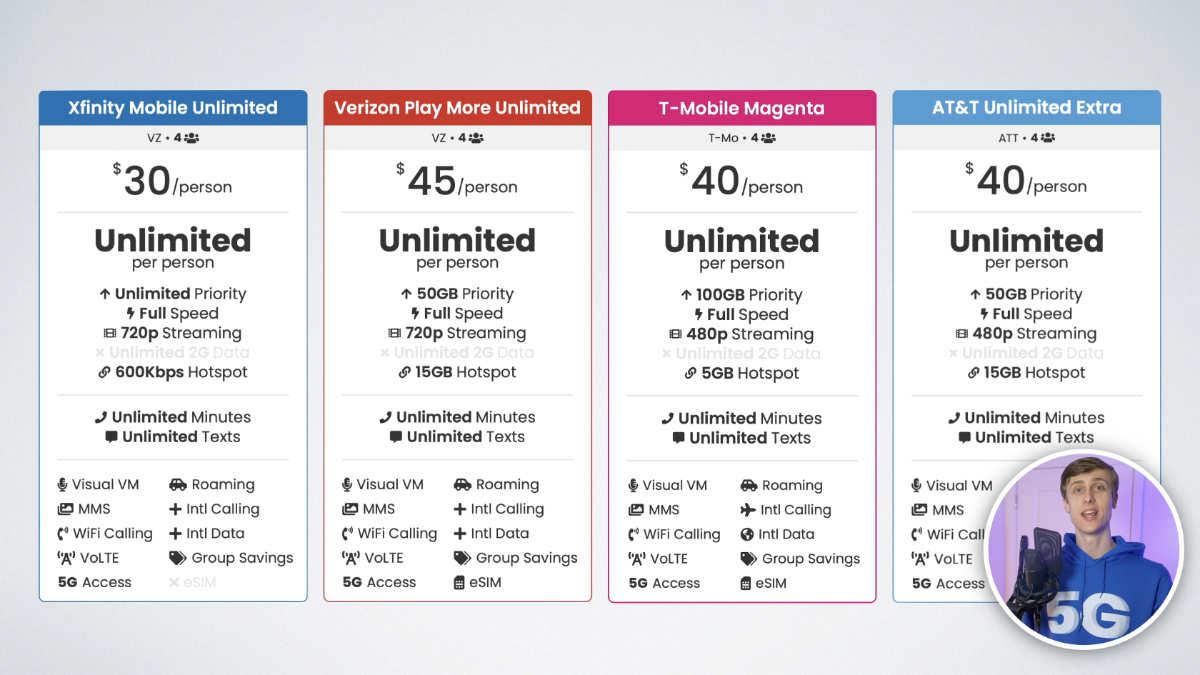
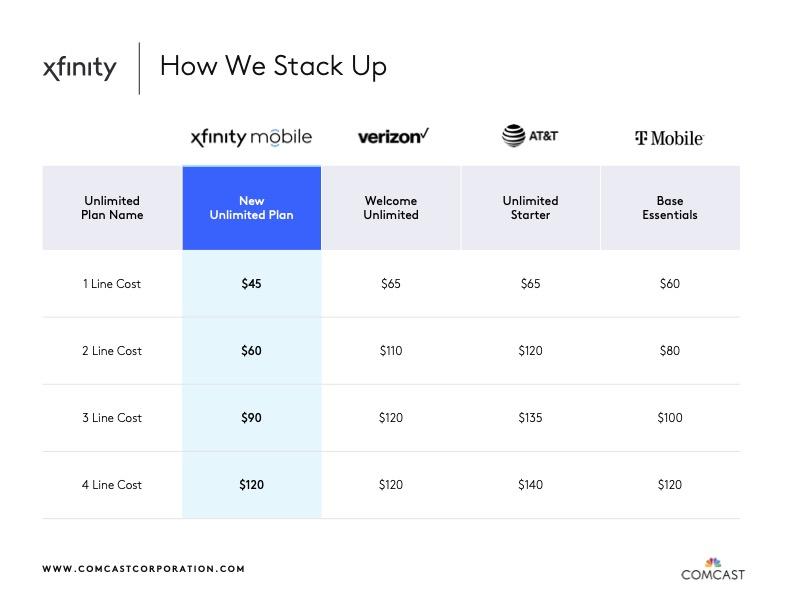
If you already pay for eligible Xfinity Internet, Xfinity Mobile’s regular pricing may be appealing—especially if you only need one or two lines.
But it’s worth comparing the whole bill, not just the advertised starting price. A different carrier may offer multi-line discounts, device credits, or a promotion that changes the math for your household.
When comparing Xfinity Mobile with Verizon, T-Mobile, AT&T, or another provider, look at:
- The price for the same number of lines
- Taxes and fees
- The price after temporary promotions end
- Coverage in each person’s important locations
- Premium-data and hotspot rules
- Device payment balances and trade-in credits
- Store locations and support options
- Whether the mobile price depends on another service
The best choice is the one that works for your locations and budget—not necessarily the one with the lowest number in an advertisement.
Is Xfinity Mobile Good for Families and Households?

It can be, particularly if your household already has eligible Xfinity Internet. The regular per-line prices make it easier to estimate the mobile portion of the bill, and people on an account can choose plans based on their needs.
For example, someone who frequently connects a laptop to their phone may benefit from Mobile Plus. Another person who mostly uses WiFi and rarely needs a hotspot may be happy with Select.
Before moving everyone, check coverage at each person’s school, workplace, and regular destinations. It’s also worth comparing the total against current multi-line offers from other carriers. A good deal for one line isn’t always the best deal for four.
What to Check Before You Switch
A little preparation can prevent an inconvenient surprise later.
- Confirm internet eligibility. Check that your Xfinity Internet service qualifies for the advertised mobile price.
- Check local coverage. Look at home, work, school, and your usual routes.
- Review recent data use. Three months of usage can give you a better picture than guessing.
- Check hotspot use separately. Select and Plus have different high-speed hotspot allowances.
- Compare the full bill. Include every line, taxes, fees, device payments, and the price after promotions.
- Check device compatibility. Use Xfinity’s phone compatibility checker.
- Confirm your phone is unlocked. If it’s locked, contact your current carrier.
- Review device balances and credits. Leaving your current carrier can affect remaining payments or promotional credits.
- Prepare your number transfer. Your current carrier may require an account number and transfer PIN.
- Keep your old line active until the transfer is complete. Canceling too early can complicate keeping your number.
Frequently Asked Questions
Can You Get Xfinity Mobile Without Xfinity Internet?
You need Xfinity Internet when you sign up. If you later cancel it, you can generally keep your mobile service. On the latest pricing plan, Xfinity says it will remove the $10 monthly Multi-Product Discount. Older plans have different rules.
Does Xfinity Mobile Use Verizon’s Network?
Yes. Xfinity Mobile primarily uses Verizon’s cellular network. It also provides access to Xfinity WiFi hotspots and uses limited Comcast-owned wireless resources in some areas.
What Happens After 50 GB on Mobile Select?
Your data doesn’t stop. After a line uses 50 GB in a billing cycle, its cellular data may be slower during network congestion. That’s different from a fixed speed reduction that applies all the time.
How Much Hotspot Data Is Included?
Mobile Select includes 15 GB of high-speed hotspot use per line. Mobile Plus includes 50 GB. You can continue using the hotspot after the allowance, but at reduced speeds.
Does Xfinity Mobile Include International Data?
Yes. The current Select and Plus plans include roaming data in eligible destinations. Xfinity says the first 10 GB per billing cycle is high-speed data; after that, speeds are reduced to up to 14 Mbps. Check your destination and the current terms before traveling.
Can You Bring Your Own Phone?
Yes, if it’s compatible and unlocked. Check its IMEI using Xfinity’s compatibility tool before transferring your number.
Is Xfinity Mobile Cheaper Than Verizon?
It can be, especially if you already have eligible Xfinity Internet. But the answer depends on your line count, promotions, taxes, fees, and the Verizon plan you’re comparing. Calculate the complete bill for your situation.
Is Xfinity Mobile Good for Gaming?
It can be suitable for casual and multiplayer gaming with a stable connection. Competitive and cloud gaming are more sensitive to changing latency and signal quality, so test the service where you normally play.
Final Verdict
Xfinity Mobile is worth considering if you already have eligible Xfinity Internet and its coverage works well for you.
For many customers, Mobile Select offers the better starting point: it costs less at the regular rate and includes 50 GB of premium cellular data. Mobile Plus may be worth the extra money if you regularly need more hotspot data or can make good use of its protection and upgrade benefits.
Ultimately, the right choice comes down to your routine. Look at your recent data use, compare the price after promotions, and check coverage in the places where you actually spend time. If you might leave Xfinity Internet later, factor in the loss of the mobile discount too.
How We Evaluated Xfinity Mobile
This guide is based on Xfinity’s published plan information, broadband disclosures, international roaming guidance, device-protection and upgrade terms, and Netflix’s published streaming requirements. The annual plan comparisons are calculations using regular per-line prices before promotions, taxes, fees, and device costs.
This article does not present nationwide hands-on network testing. Xfinity’s published speed ranges are estimates, and individual results can differ. Plan details were checked on November 3, 2026; verify current pricing, availability, and terms before signing up.
You May Also Like
 Computers & PC Games
Why Is Minecraft Bedrock Lagging on Realms? How to Fix It
 Internet
The Best RV Satellite Internet In 2027: Staying Connected on the Road
 Internet
Wi-Fi Connected but No Internet? Find the Cause and Fix It
 Computers & PC Games
The Different Types of Minecraft Server Lag
 Internet
Starlink Mini Review: Is It Worth It for Portable Internet in 2026?
 Internet
