
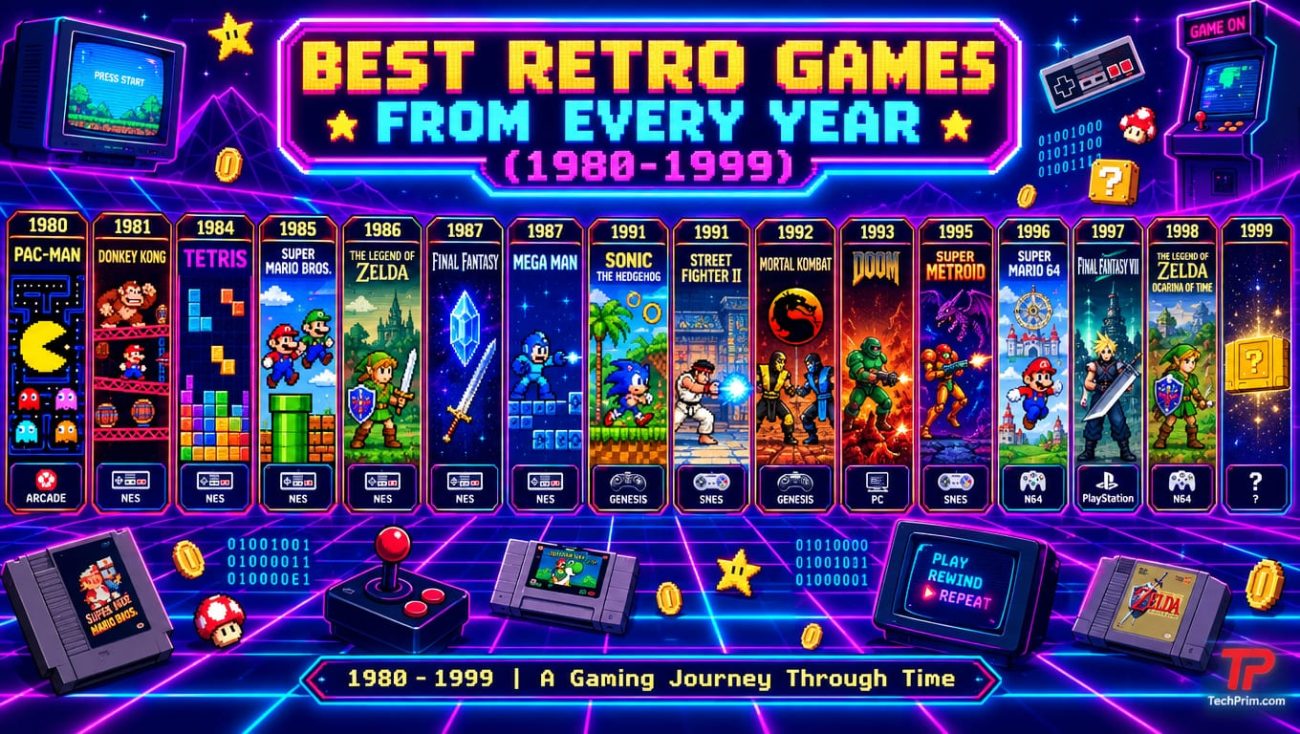
Looking for the best retro games to play? Pac-Man, Tetris, Super Mario Bros., Street Fighter II, Doom, and Chrono Trigger are easy places to start. But a useful retro games list should leave room for more than the most popular retro games. Some of my favorite discoveries were the old school games a friend insisted I try—or the strange-looking cartridge I borrowed without knowing what was inside.
I remember talking about games at school almost as much as playing them. Someone would swear they’d found a secret in Super Mario Bros. 3, and the rest of us would spend the afternoon trying to prove it. After the last bell, the question was whose house we’d go to and how many turns we could squeeze in before dinner. That’s the part of classic gaming I miss most: the rumors, the arguments, and the little victories we brought back to school the next morning.
I didn’t play every title here when it first came out. Some older arcade games and computer adventures were discoveries I made later. That’s another pleasure of revisiting old video games: you can return to nostalgic games you know by heart, then find classic video games that somehow passed you by. This guide follows 76 retro games from 1980 through 1999, from familiar favorites to lesser-known games I think are worth another chance.
How These Games Were Selected
“Best” is inevitably subjective. A five-minute arcade game and a 40-hour RPG aren’t trying to give you the same gaming experience, so I didn’t judge them by one rigid formula. I considered:
- Enjoyment today: Is there still a good reason to play it?
- Originality in its era: What made it stand out when it arrived?
- Influence: Did its ideas help shape other games?
- Long-term reputation: Does it remain worth discussing?
- Genre or platform significance: Does playing it help explain part of gaming history?
- Accessibility: How much adjustment do its controls or interface require?
- Replay value: Would I want another round, run, or full playthrough?
Not every pick excels in every category. Tetris is remarkably welcoming. Elite takes patience. The Death and Return of Superman is here as a memorable comics-based beat-’em-up, not because I’d rank it above every other 1994 release. I’d rather make those distinctions than pretend every game on a long list is equally essential.
For a useful comparison, The Strong National Museum of Play considers recognition, longevity, reach, and influence for its World Video Game Hall of Fame. My list draws on some of those ideas while making room for personal replay value.
How the years work: Games are grouped by their first release, generally in their original market. That means Castlevania appears in 1986 for its Famicom Disk System debut, not 1987 for its North American NES release. Mortal Kombat appears in 1992 for the arcade original, not 1993 for the home versions. Where versions differ substantially, I’ve said which one I mean.
The Best Retro Games of the 1980s
The best 80s video games didn’t all come from the same place. Some began as classic arcade games you could understand before your first quarter was gone. Others came from home computers or early consoles and expected you to spend an evening learning their worlds. The games from the 80s below show both sides of that decade: immediate challenges and surprisingly ambitious adventures.
Video games were already around before 1980—70s video games helped establish the arcade and home-gaming foundations—but this list begins with the decade when many familiar characters, genres, and design ideas found their footing.
1980: The Arcade Finds Its Personality
1. Pac-Man (1980, Arcade)
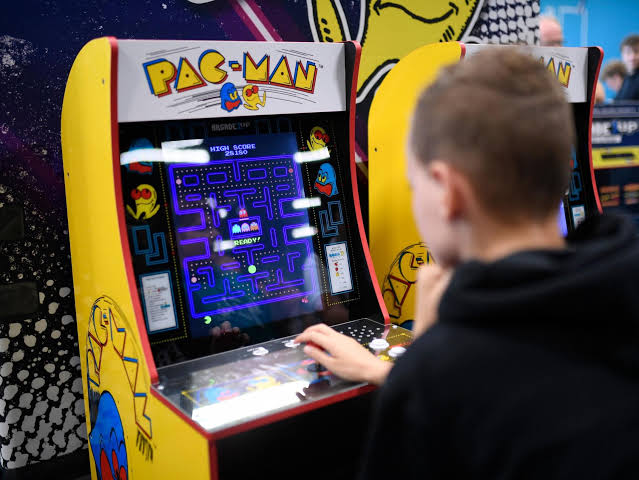
Originally released on: Arcade
Best for: Maze-game newcomers, quick sessions, and high-score chasing
I can sit down with Pac-Man intending to play one round and immediately start bargaining with myself for another. Clear the maze, avoid the ghosts, grab a power pellet when you need an escape: you understand the rules almost at once. The trouble is putting them into practice when a safe-looking route suddenly closes.
It’s one of my first recommendations to anyone exploring classic arcade games because its tension still works without a nostalgia filter. Bandai Namco’s history dates its Japanese public release to 1980.
2. Missile Command (1980, Arcade)
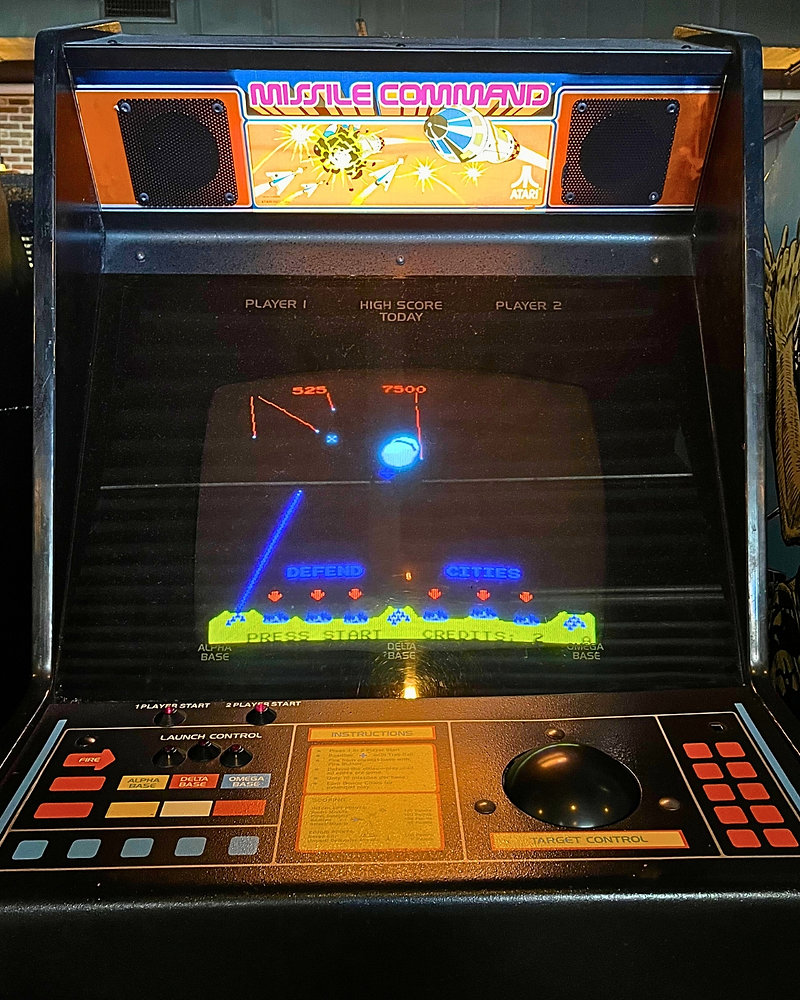
Originally released on: Arcade
Best for: Defensive strategy, trackball controls, and tense arcade play
Missile Command makes defense feel urgent. Incoming missiles threaten your cities, and you position explosions to intercept them. At first, I try to save everything. Before long, I’m deciding which threat needs an answer now and which one I might still catch later.
Your losses remain visible. That changes the mood: every city left standing begins to feel precious. The visuals are spare, but they tell you everything you need about the danger overhead.
3. Battlezone (1980, Arcade)
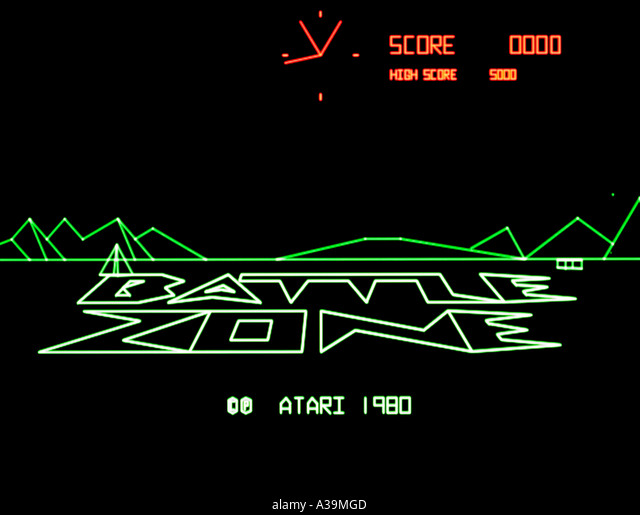
Originally released on: Arcade
Best for: Early first-person game history and atmospheric tank combat
Battlezone makes a battlefield out of glowing vector lines. You scan for tanks through a first-person view, steer around obstacles, and try to fire before an enemy does. Its sparse landscape gives each encounter room to feel threatening.
I wouldn’t pretend the controls are as approachable as those of a modern shooter. I’d recommend it to someone curious about how early video games created a convincing feeling of being there with very little visual detail.
1981: Skill Becomes a Spectator Sport
4. Donkey Kong (1981, video game, Arcade)
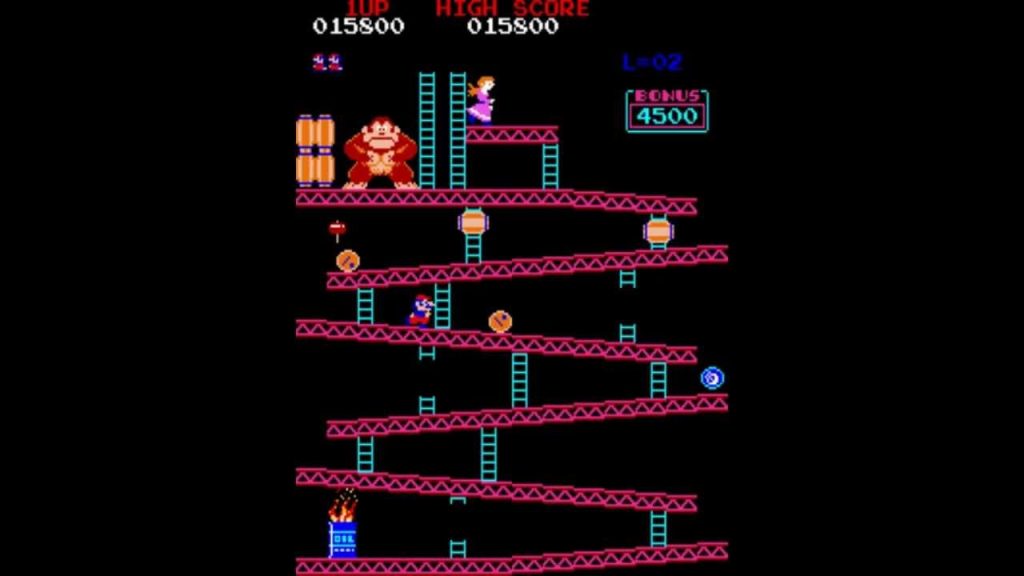
Originally released on: Arcade
Best for: Early platforming, precise jumps, and Mario history
A good Donkey Kong run looks easy until I try to repeat it. Climb, dodge barrels, time a jump: anyone watching understands the problem, but solving it consistently takes practice. Each screen is compact enough to read and demanding enough to punish a careless move.
I also like revisiting it as a reminder that Mario’s early adventures weren’t all about racing through long stages. Here, you study the whole screen and work your way through it.
5. Galaga (1981, Arcade)
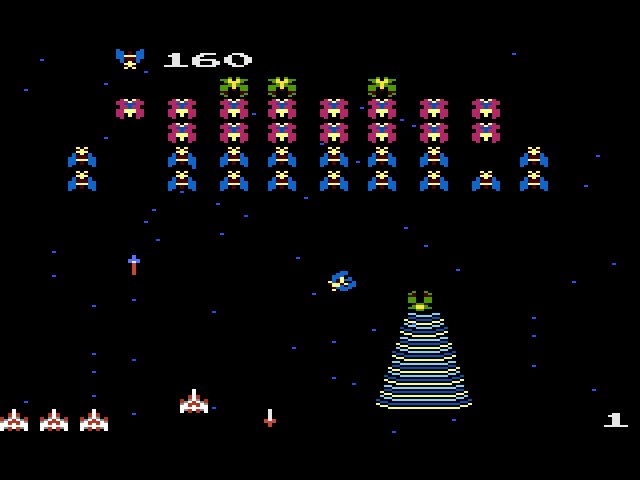
Originally released on: Arcade
Best for: Fixed-screen shooting, pattern learning, and risk-reward decisions
Galaga has a rhythm I can slip into quickly. Enemies enter in formation, break away, and attack while I search for an opening. Then I move a fraction too late and remember why I’m still learning their patterns.
Its most tempting gamble is recovering a captured fighter to create a more powerful dual-fighter setup. The reward is clear; getting it safely is another matter. That choice gives a fast shooter an extra layer of personality.
6. Defender (1981, Arcade)
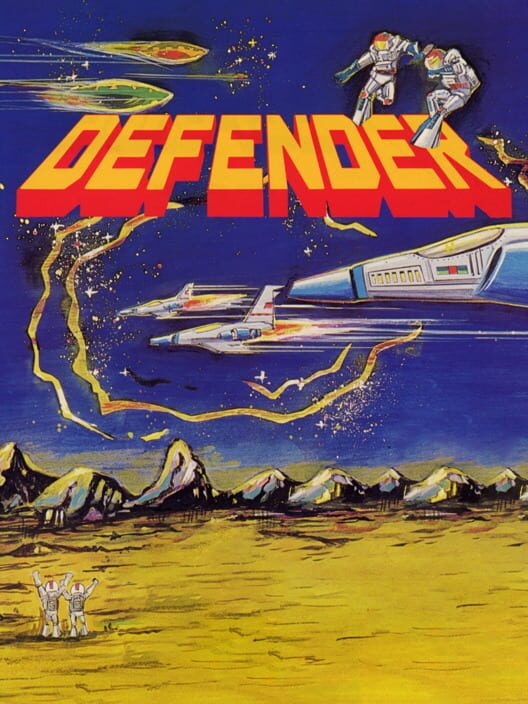
Originally released on: Arcade
Best for: Demanding action, multitasking, and high-score play
I won’t call Defender beginner-friendly. The landscape scrolls, enemies arrive quickly, people need rescuing, and the radar wants some of your attention too. My first attempts can feel like trying to follow several conversations at once.
Stay with it, though, and a successful rescue becomes thrilling. You’re managing a situation, not merely shooting the nearest target. That demanding design is central to its appeal, as The Strong’s profile helps explain.
1982: Familiar Ideas Get Sharper
7. Ms. Pac-Man (1982, Arcade)
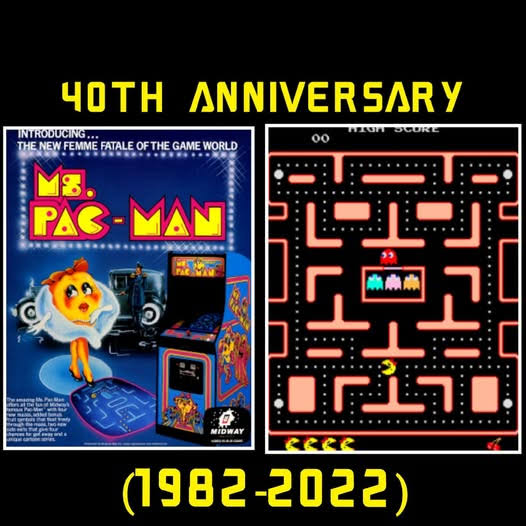
Originally released on: Arcade
Best for: Maze-game fans looking beyond the original Pac-Man
Calling Ms. Pac-Man “more Pac-Man” is fair but incomplete. Changing mazes keep me from relying on one comfortable route, and I find myself reacting more closely to what’s happening in front of me. A narrow escape feels wonderful.
There’s room for both games in a retro collection. The original is an immediately clear introduction; this one shows how carefully chosen changes can give a familiar idea fresh energy.
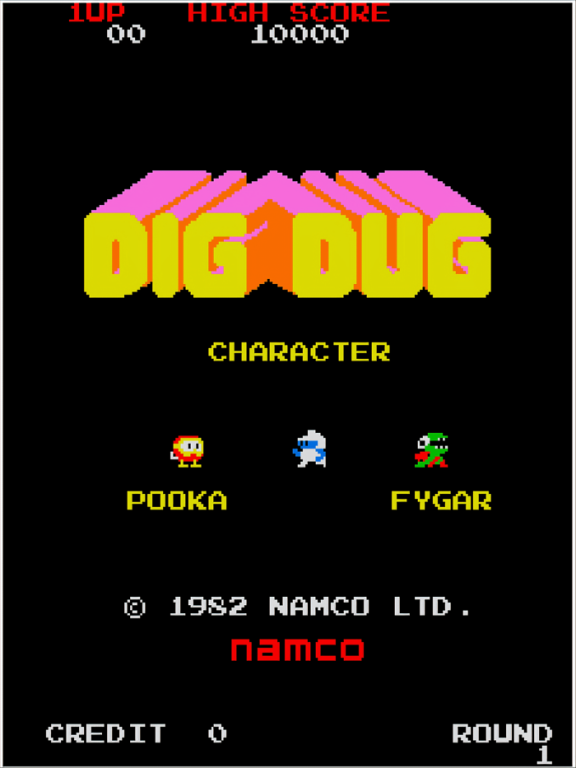
8. Dig Dug (1982, Arcade)
Originally released on: Arcade
Best for: Action-puzzle fans, improvised traps, and short sessions
Explaining Dig Dug aloud makes it sound stranger than it feels in your hands. You tunnel underground, inflate enemies, and drop rocks on them. Every tunnel changes the space, though, and a clever trap can become a problem when an enemy takes an unexpected route.
I like that mix of planning and improvisation. Its cheerful appearance hides growing pressure, while its clear rules make it easy to understand why your latest brilliant idea failed.
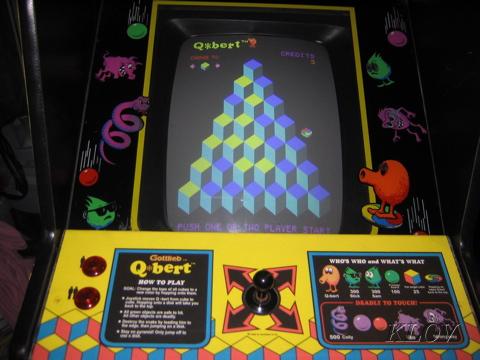
9. Q*bert (1982, Arcade)
Originally released on: Arcade
Best for: Unusual controls and quick puzzle-action
There’s a moment in every Q*bert session when I’m convinced I’ve mastered its diagonal hops. Then the pyramid gets busy, I move in the wrong direction, and my confidence disappears. Changing the cubes’ colors is easy to explain; doing it under pressure takes practice.
I recommend it if you want an arcade game that feels unlike its neighbors. Once the movement clicks, you begin planning several hops ahead—and your mistakes become much more interesting.
1983: Games Get More Social
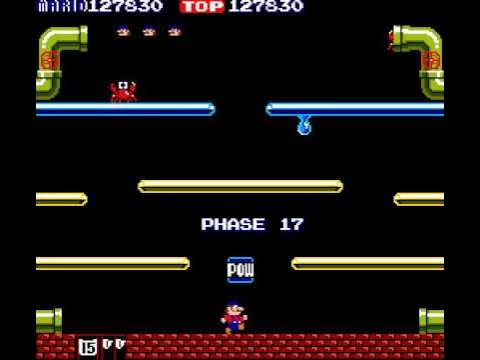
10. Mario Bros. (1983)
Originally released on: Arcade
Best for: Two-player action and early Mario history
Before Super Mario Bros. sent Mario across the Mushroom Kingdom, Mario Bros. kept him and Luigi in a single-screen arena. You bump enemies from below, then hurry over before they recover. It’s readable within minutes and easy to mishandle once the screen gets crowded.
I prefer playing with someone else. Cooperation helps, but a shared arena also creates accidental interference. That mix of teamwork and “You got in my way!” gives it a personality distinct from Mario’s later adventures.
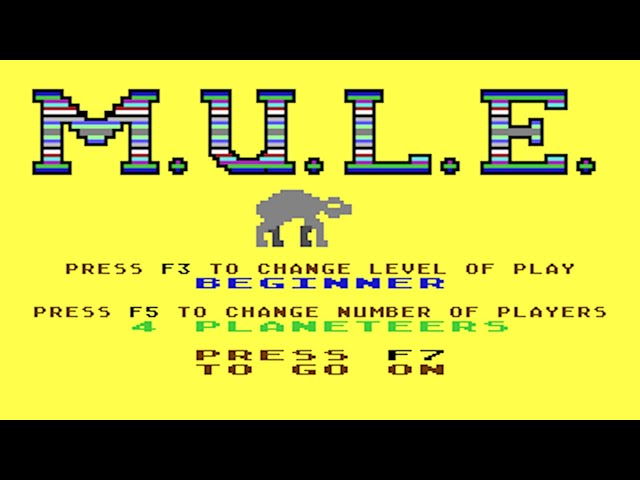
11. M.U.L.E. (1983, Atari 8-bit Computers)
Originally released on: Atari 8-bit computers
Best for: Multiplayer strategy, negotiation, and economic games
M.U.L.E. can turn a resource auction into a conversation your friends are still having afterward. You develop land, produce goods, and trade, but much of the drama comes from guessing what the other players need and what they’re willing to give up.
It takes more effort to set up and learn than an arcade favorite. Give it an evening with the right group, though, and you’ll find an early strategy game whose social side matters as much as its rules.
12. Track & Field) (1983, Arcade)
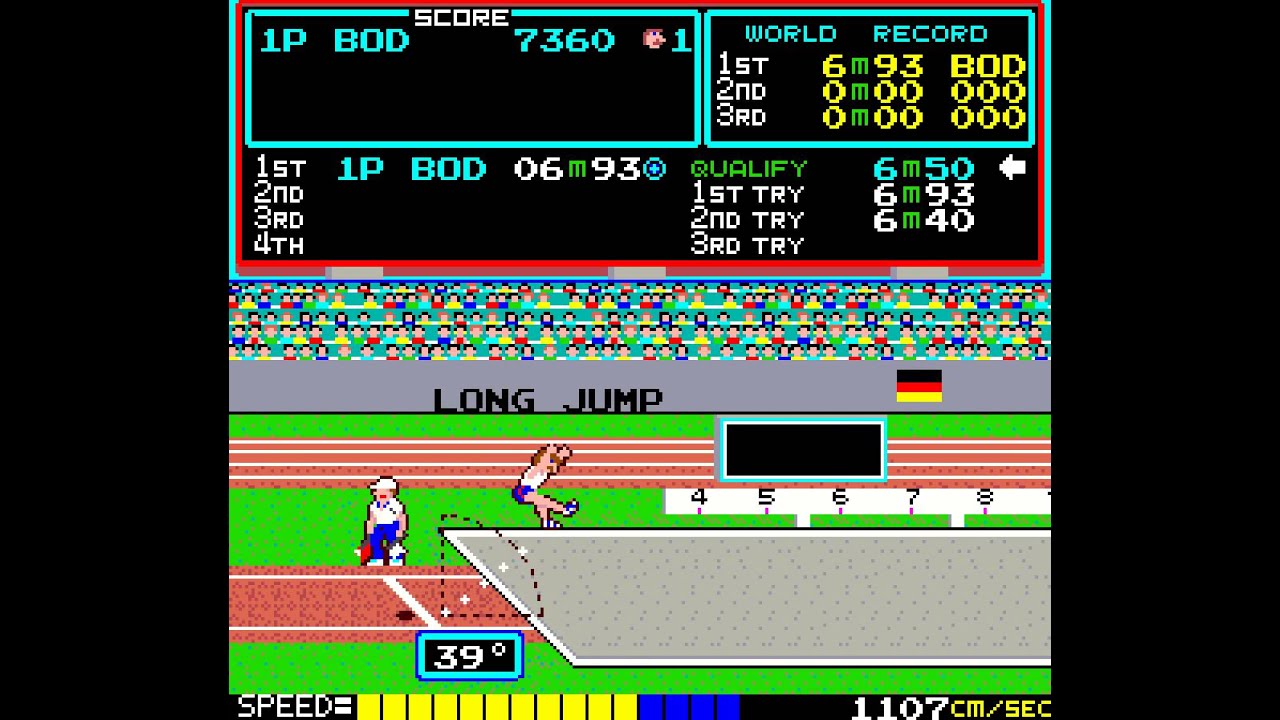
Originally released on: Arcade
Best for: Competitive sports events, quick challenges, and Konami arcade history
Track & Field turns button presses into a noisy contest. Its athletics events are simple to grasp, and that simplicity makes it easy for a group to gather around and challenge whoever just posted the best result.
I wouldn’t recommend it for a relaxed evening—or for anyone hoping their fingers can take a break. The appeal is the shared effort: cheering, laughing at a mistimed attempt, and insisting you can do better on the next event. It captures a particularly physical side of classic sports games.
13. Dragon’s Lair) (1983, Arcade)
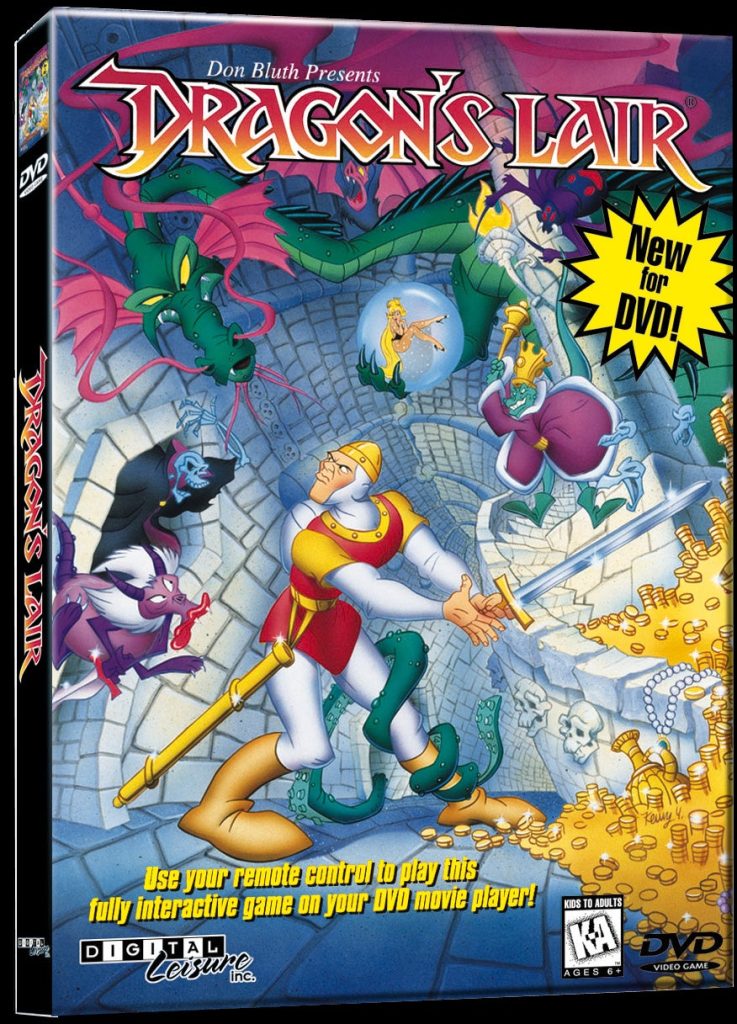
Originally released on: Arcade
Best for: Animation, arcade spectacle, and laserdisc-game history
Dragon’s Lair must have been an arresting cabinet to walk past in 1983. Its animated-film look offered visual drama most neighboring games couldn’t match. Even now, I understand why someone would stop to watch.
A fair warning: the presentation doesn’t make it forgiving. Progress depends heavily on learning which input to make at the right moment, and failure can be abrupt. I value it as a striking experience and piece of arcade history more than as an open-ended adventure.
1984: Action Takes Several Forms
14. Tetris (1984, Electronika 60)
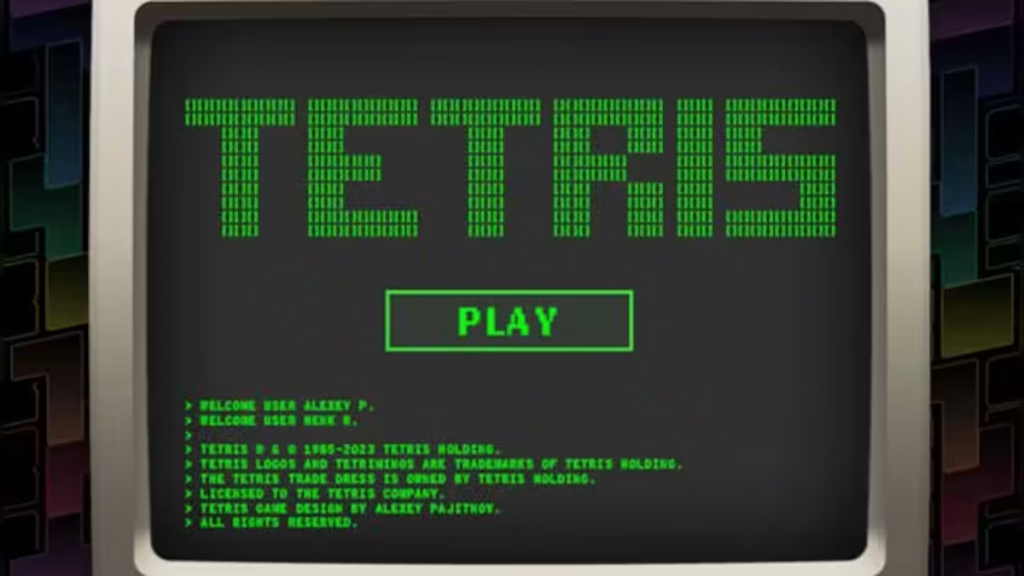
Originally released on: Electronika 60 computer
Best for: Puzzle-game beginners and endless improvement
A crooked stack in Tetris feels personal because I put every awkward gap there myself. Each falling piece gives you a clear problem, but its placement also creates the next one. After a bad run, I’m certain I know what I’d change. Then I play again.
The original dates to 1984, well before the Game Boy version many players remember. Whichever edition you know, few classic puzzle games are as easy to begin—or as difficult to put down.
15. Elite (1984, BBC Micro)
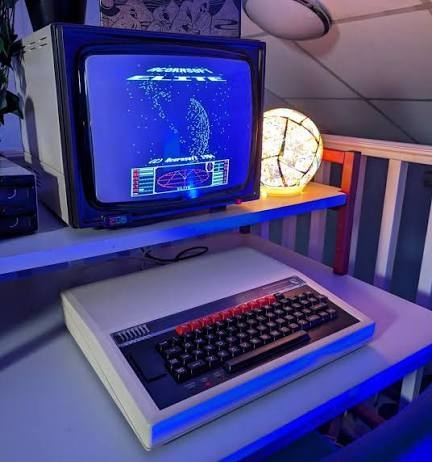
Originally released on: BBC Micro
Best for: Open-ended space games, trading, and patient exploration
Elite gives you a ship and room to decide what kind of pilot you want to be. Trade between systems, take risks in combat, or follow a route simply to see where it leads. Much of the adventure grows from choices you make yourself.
It requires patience. The interface won’t greet you with modern conveniences, and some of its systems take time to learn. I’d approach it with curiosity rather than a checklist. Its sense of freedom remains striking for a 1984 home-computer game.
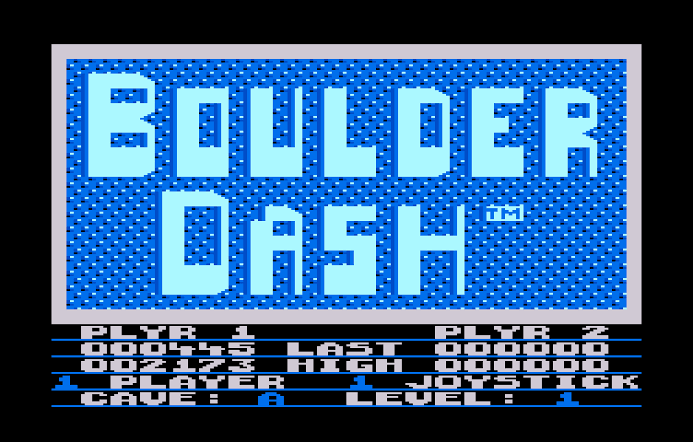
16. Boulder Dash (1984, Atari 8-bit Computers)
Originally released on: Atari 8-bit computers
Best for: Puzzle-action, chain reactions, and carefully planned routes
Every diamond in Boulder Dash is a temptation. Dig toward it, a rock shifts, and the path you counted on may suddenly disappear. I like how often it makes me think about what will happen because of my next move.
It blends an action game’s urgency with a puzzle’s need for foresight. You can learn its rules quickly, but reading a busy screen takes practice. The official history traces its original release to 1984.
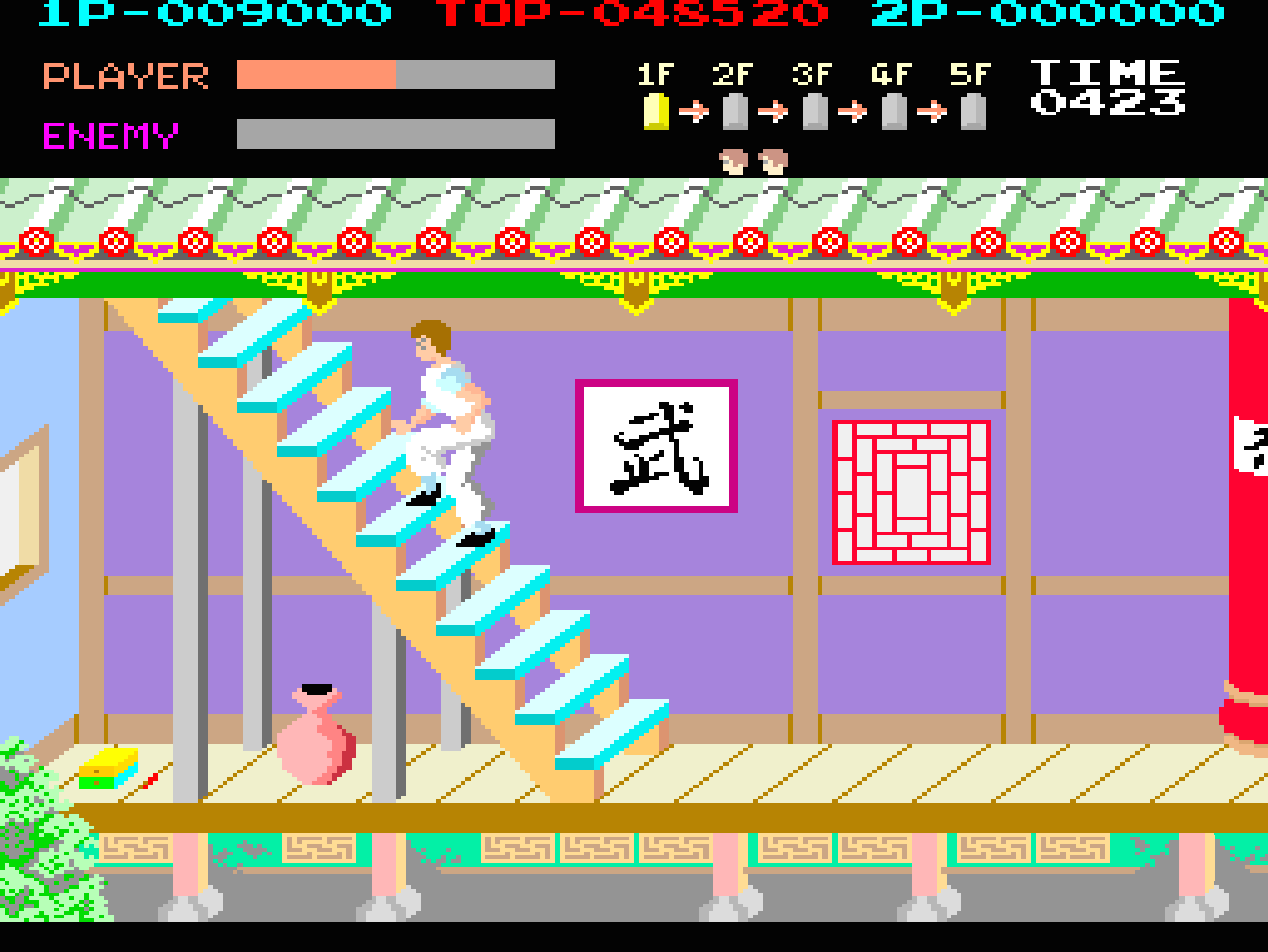
17. Kung-Fu Master (1984)
Originally released on: Arcade
Best for: Early side-scrolling beat-’em-ups and martial-arts action
Kung-Fu Master doesn’t give you a sprawling move list. You fight your way through floors of enemies, judging how close they are and whether a punch, kick, or jump will keep you moving. That directness is part of its charm.
I’d play it partly to understand the roots of side-scrolling beat-’em-ups. It can be unforgiving, but you can also see how a clear forward-moving challenge—and the satisfaction of surviving one more crowded stretch—became such a durable idea.
1985: Console Classics Gather Momentum
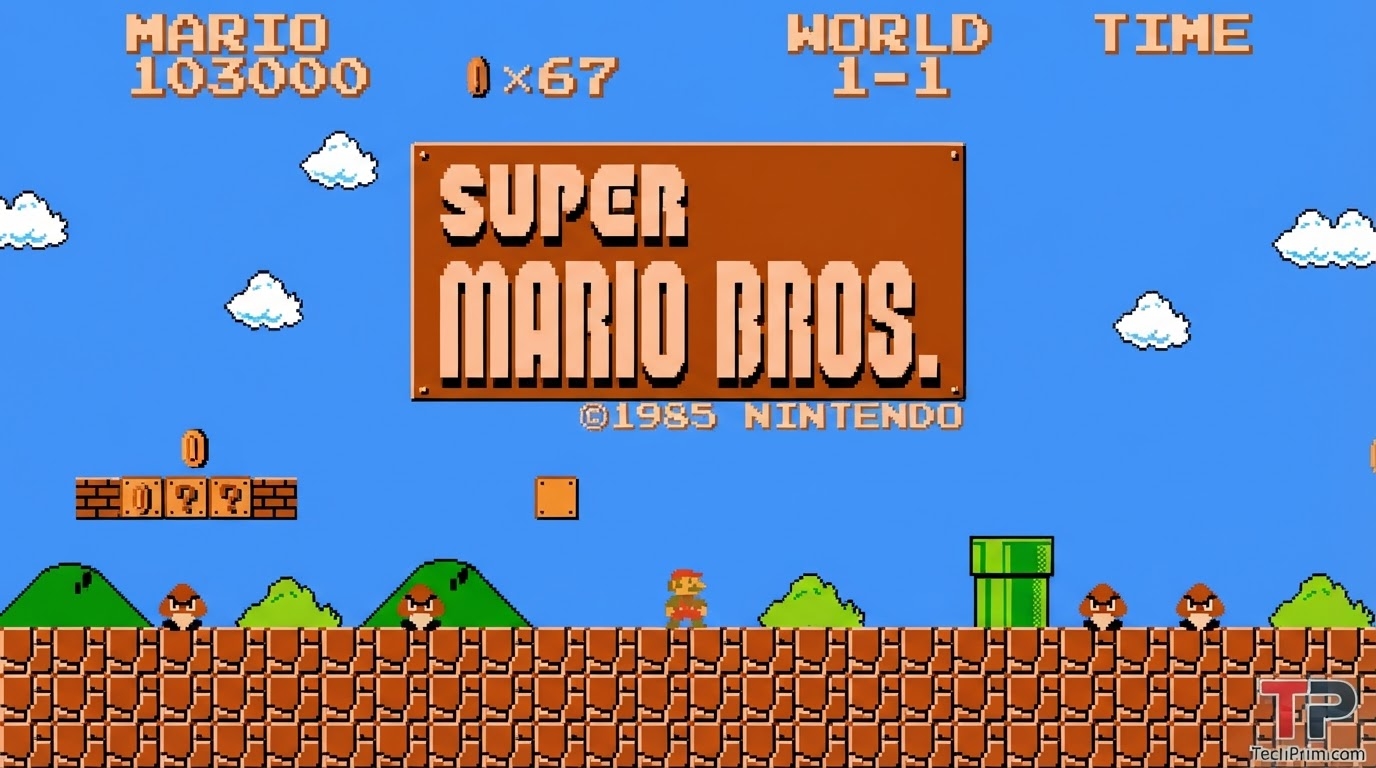
18. Super Mario Bros. (1985, Famicom)
Originally released on: Famicom; later NES in other markets
Best for: First-time retro players and 8-bit platforming
When someone asks where to begin with old school video games, I usually point here. Super Mario Bros. doesn’t stop to explain blocks, enemies, or power-ups. Its opening stages let you discover what happens when you run, jump, and take a chance.
On a replay, what stays with me is the movement. A cautious jump will work; carrying speed into it might reveal a better route. Its 8-bit look is famous, but the feel of controlling Mario keeps it enjoyable.
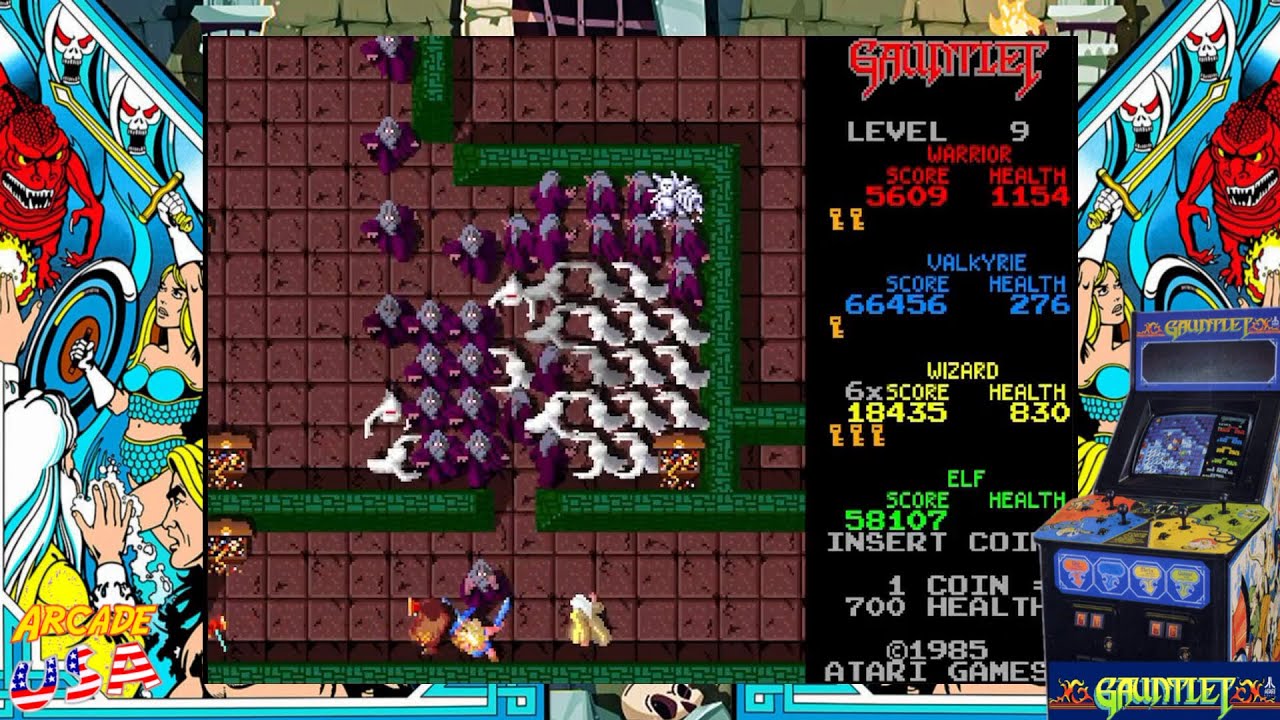
19. Gauntlet (1985, Arcade)
Originally released on: Arcade
Best for: Group dungeon crawls and shared arcade chaos
Gauntlet gets louder when friends join. Dungeons fill with enemies, food, treasure, and arguments about which direction to take. Health drains over time, so even a quiet detour has a cost.
I wouldn’t recommend it as a carefully paced solo fantasy adventure. I’d recommend it for the cheerful panic of several people trying to stay together while everyone has a different plan. Sometimes the people beside the cabinet supply half the entertainment.
20. Gradius (1985, Arcade)
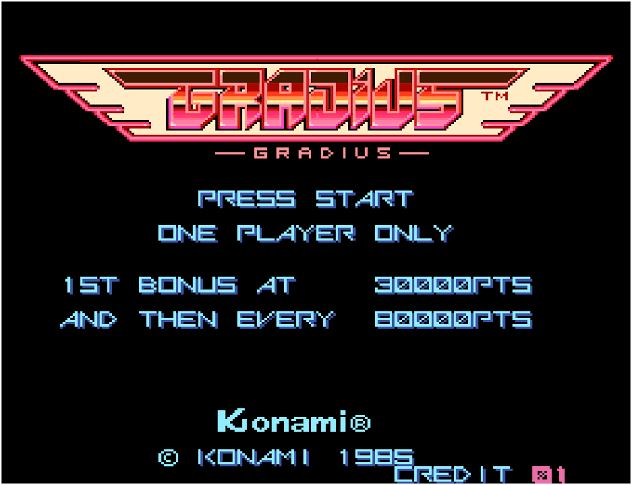
Originally released on: Arcade
Best for: Shoot-’em-up fans and difficult upgrade decisions
Gradius asks me to think while I’m dodging. Power-up capsules advance a selection bar, so taking an upgrade now means passing over something I might want more. Do I need speed immediately, or can I survive long enough to choose another improvement?
That decision makes its side-scrolling action more than a reflex test. It’s demanding, and losing a well-equipped ship hurts. If you enjoy gradually mastering an arcade shooter, there’s plenty here to learn.
21. Bomberman (1985, Famicom)
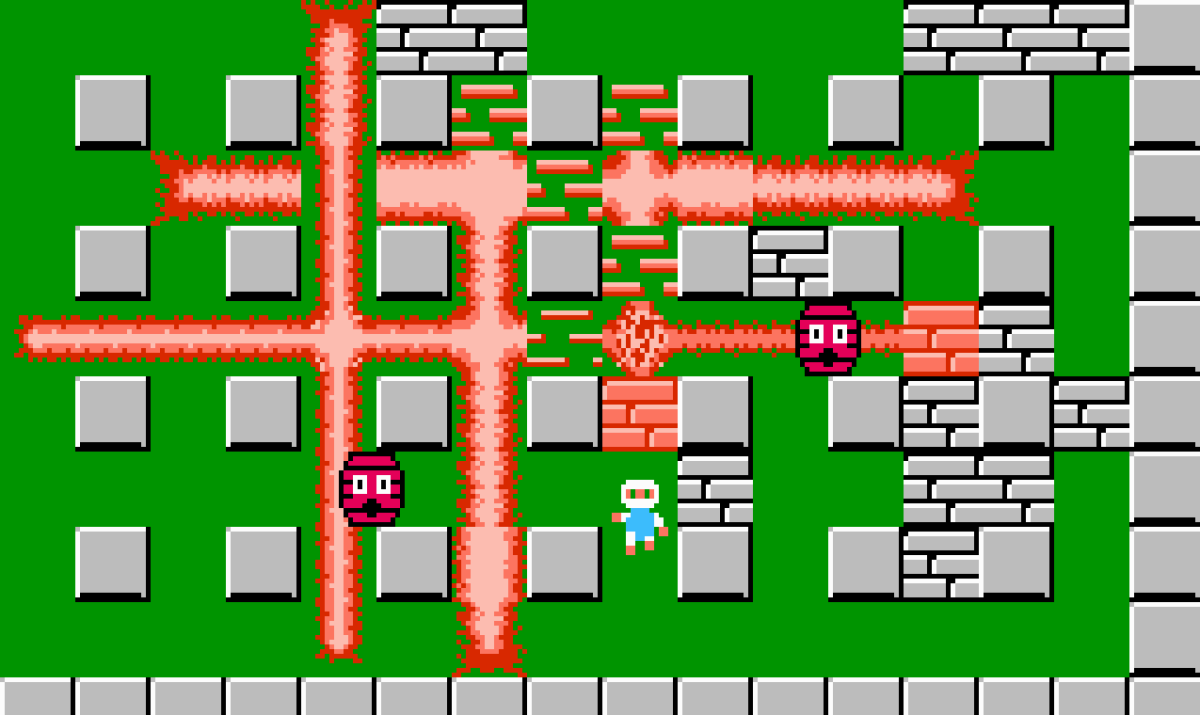
Originally released on: Famicom; later NES in North America
Best for: Single-player maze action, bomb placement, and trap-making
It’s easy to remember Bomberman for multiplayer, but this 1985 Famicom version is a single-player game. You clear enemies, search for an exit, collect upgrades, and learn an essential lesson: never place a bomb without knowing where you’ll stand when it goes off.
The date needs a little care. Hudson Soft made an earlier computer game in 1983; this substantially revised Famicom release arrived in 1985. Hardcore Gaming 101’s history explains the relationship between them.
1986: Exploring and Surviving
22. The Legend of Zelda (1986, Famicom Disk System)
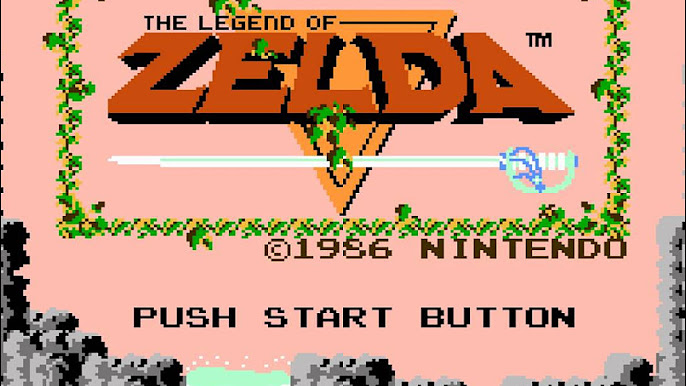
Originally released on: Famicom Disk System
Best for: Open-ended exploration, secrets, and classic adventures
The first Legend of Zelda trusts you to be curious. A suspicious wall or unusual path may lead somewhere useful, but the game doesn’t rush to confirm your guesses. I like finding something because I paid attention.
That freedom can be bewildering if you’re accustomed to modern adventure games. Take notes, exchange discoveries with a friend, or return later with a new idea. Getting lost is sometimes how you learn its world.
23. Metroid (1986, Famicom Disk System)
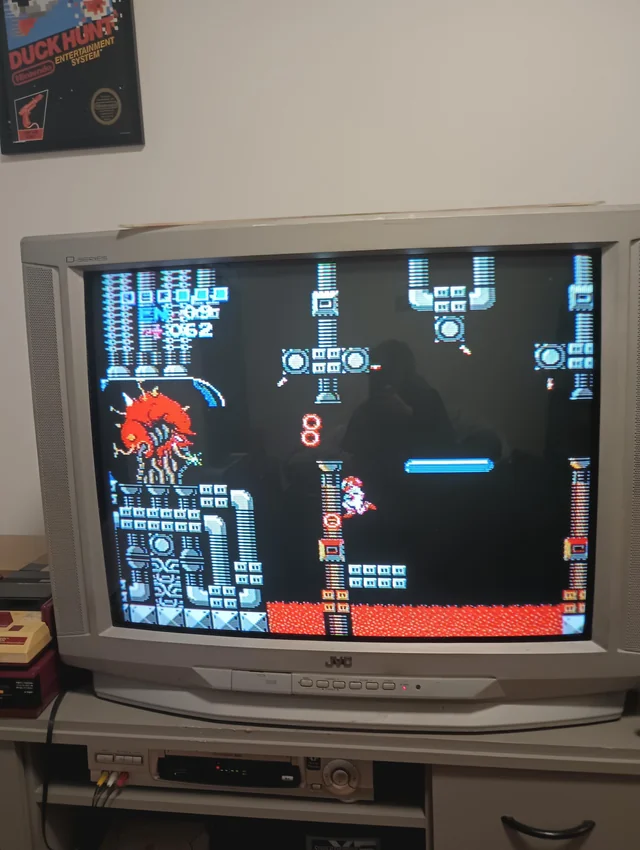
Originally released on: Famicom Disk System
Best for: Lonely atmosphere, backtracking, and exploratory action
I wouldn’t hide the original Metroid’s rough edges. Corridors can look alike, and it doesn’t provide the convenient map later entries would offer. You have to pay attention if you want to know where you’ve been.
What makes the effort worthwhile is how its world changes as you gain abilities. An obstacle becomes a reason to return, and a familiar passage can lead somewhere new. Even before I know the layout, I can feel its quiet, uneasy mood.
24. Castlevania (1986, Famicom Disk System)
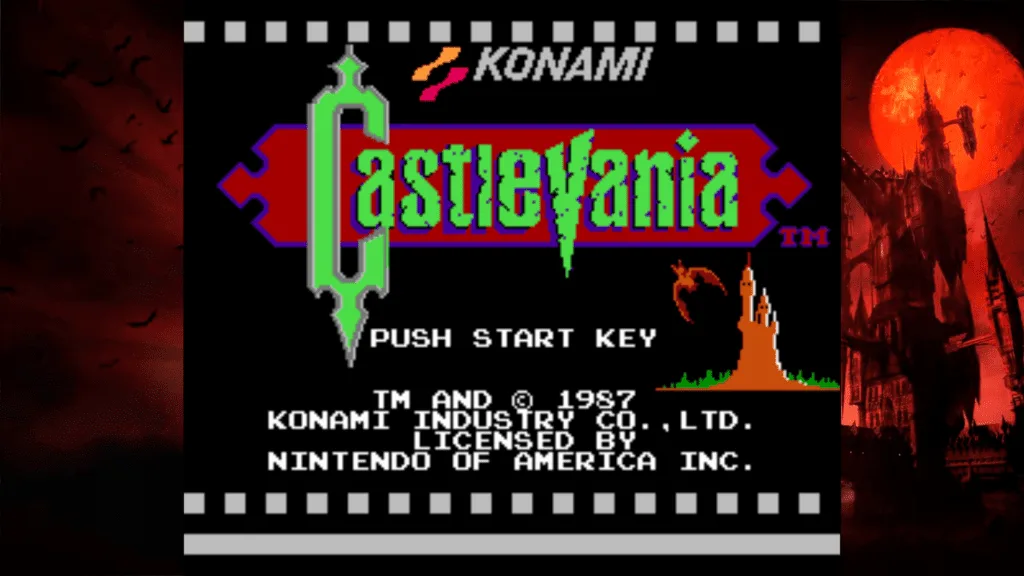
Originally released on: Famicom Disk System; NES cartridge release followed in 1987
Best for: Deliberate action, Gothic atmosphere, and enemy patterns
Simon Belmont’s movements ask you to commit. A jump isn’t easily corrected halfway through, and a careless whip strike can leave you exposed. When I rush Castlevania, it usually reminds me why that’s a bad idea.
Its year is easy to misremember: the game debuted on Japan’s Famicom Disk System in 1986 and reached North American NES players in 1987. Both memories are valid; this list follows the first release.
25. Adventure Island (1986, Famicom, NES)
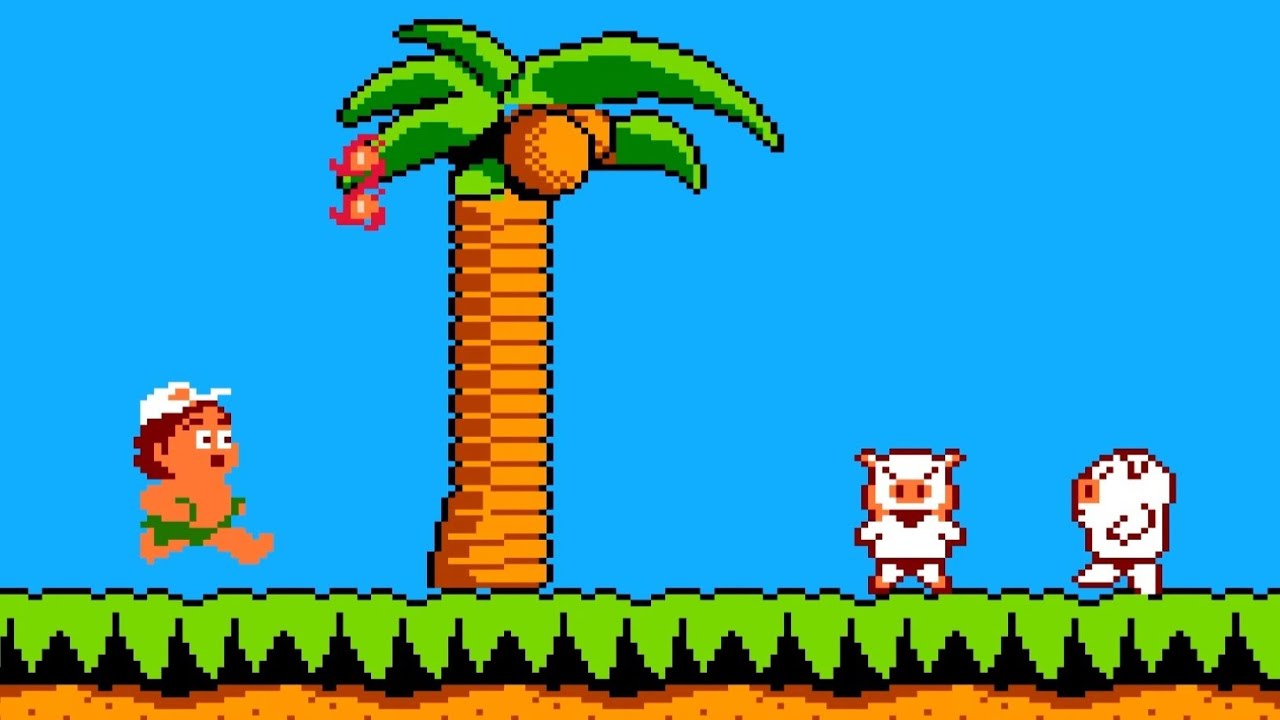
Originally released on: Famicom; later NES in North America
Best for: Fast platforming, short bursts of action, and tough stages
Adventure Island looks bright and carefree until its clock starts pushing you forward. As Master Higgins, you collect fruit to keep moving, dodge hazards, and try not to turn a confident jump into an abrupt ending.
I enjoy it when I’m in the mood for a platform game that rewards rhythm and quick decisions rather than leisurely exploration. It first appeared for the Famicom in Japan in 1986; the North American NES release came later. That difference matters if your memory places it closer to the decade’s end.
1987: Adventures Find New Voices
26. Mega Man (1987, Famicom)
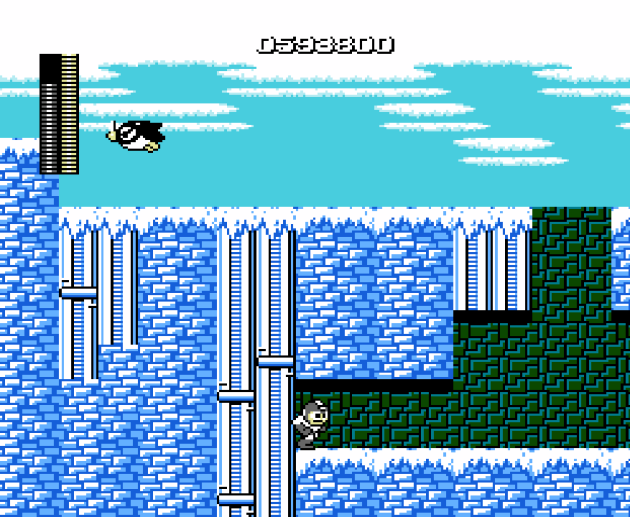
Originally released on: Famicom; later NES in other markets
Best for: Boss battles and experimenting with stage order
Choosing a stage before you know what’s inside gives the first Mega Man an immediate sense of possibility. Beat a Robot Master, gain their weapon, and another difficult fight might suddenly look manageable. Your route becomes a small strategic decision.
I’d send most beginners to Mega Man 2 first; this original can be sharp-edged. Still, the pleasure of connecting stages, bosses, and weapons is already here.
27. Final Fantasy (1987, Famicom)
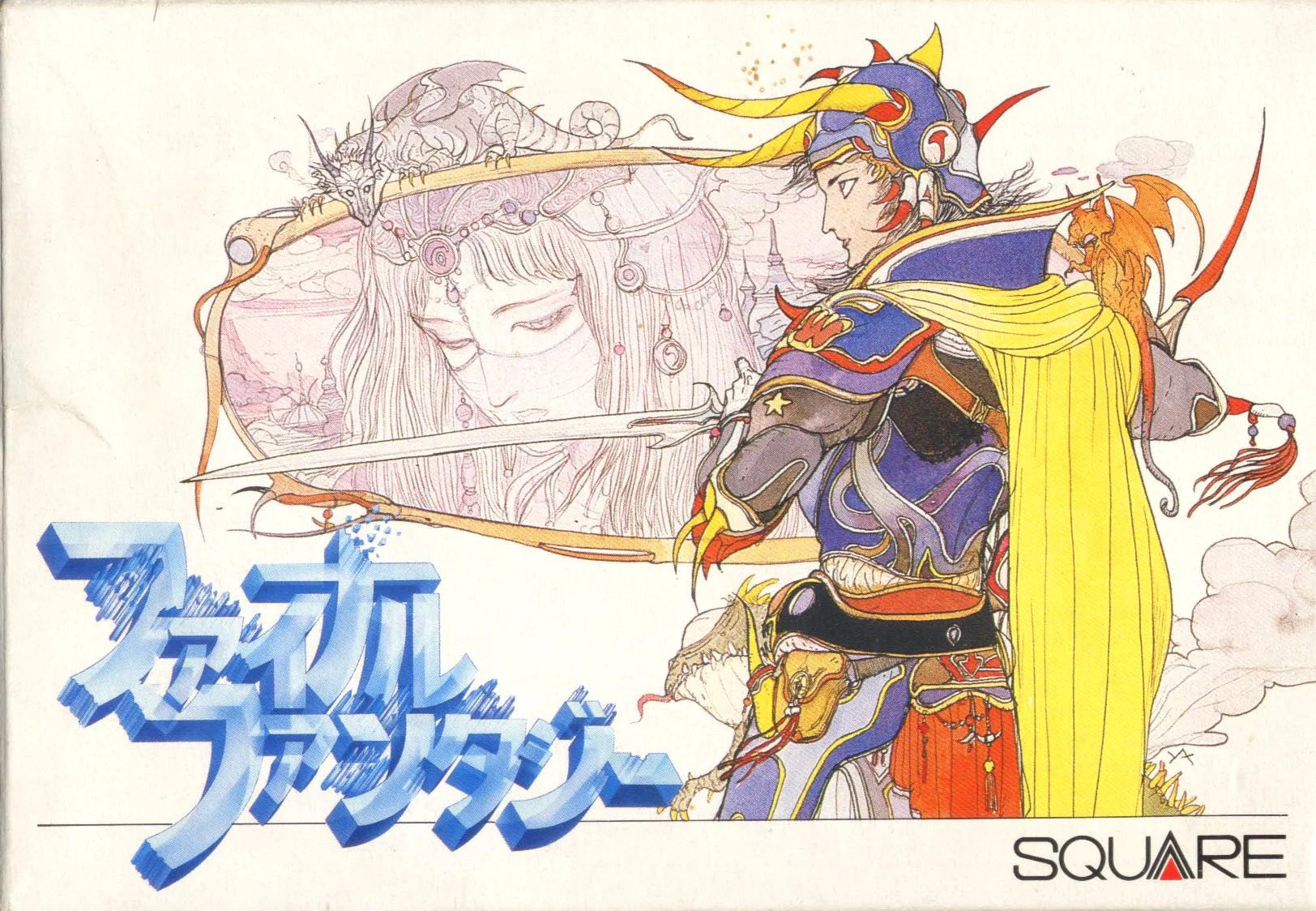
Originally released on: Famicom; later NES in other markets
Best for: Party-building and the roots of console RPGs
Before the elaborate stories of later entries, Final Fantasy gives you a party to assemble and a long journey to begin. Choosing character classes makes that adventure feel like yours: these are the people you decided to bring.
Its menus and pacing can feel slow today. I revisit it for the appeal of traveling from town to town with a group I built myself. It shows how much a party and a distant destination can accomplish.
28. Contra (1987, Arcade)
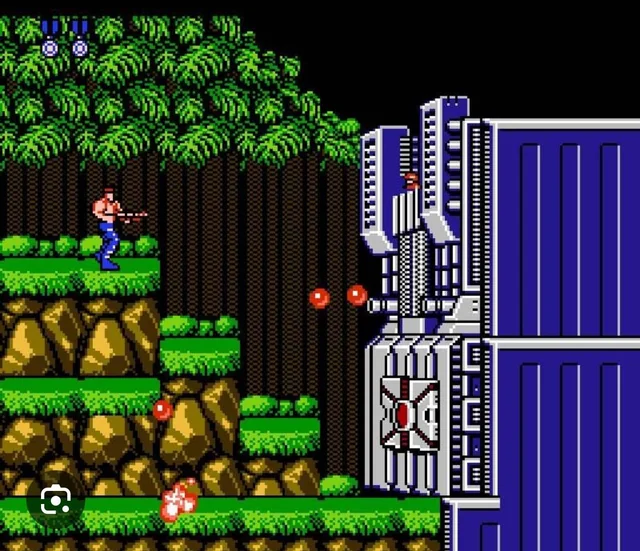
Originally released on: Arcade; the familiar NES version followed later
Best for: Fast co-op action and pattern learning
Many players think of the NES when they hear Contra, but the game began in arcades in 1987. Its appeal is immediate: keep moving, keep firing, and try to survive an action game that rarely lets you relax.
I particularly enjoy it with another player. Reaching the next stretch together turns a narrow escape into a shared little victory. Bring patience; early attempts can end quickly.
29. Maniac Mansion (1987, Commodore 64 and Apple II)
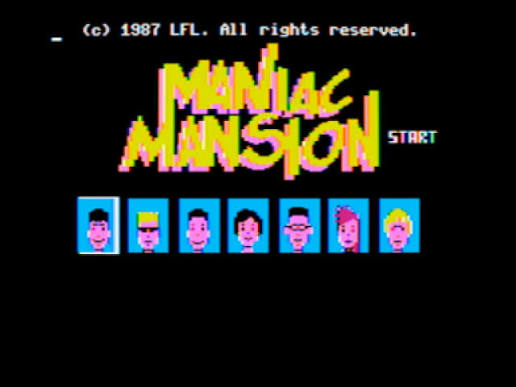
Originally released on: Commodore 64 and Apple II; developed by Lucasfilm Games
Best for: Point-and-click adventures, oddball humor, and puzzle solving
Maniac Mansion invites you into a strange house and gives you a cast of characters who can approach its problems in different ways. I love the feeling that an ordinary-looking object might turn out to matter hours later—although I also know that feeling can send me searching every room twice.
It’s a better choice for a patient evening than a quick break. Take notes, experiment, and enjoy how much personality Lucasfilm Games fit into its unsettling, funny little world.
1988: Bigger Sequels and Louder Arcades
30. Super Mario Bros. 3 (1988, Famicom)
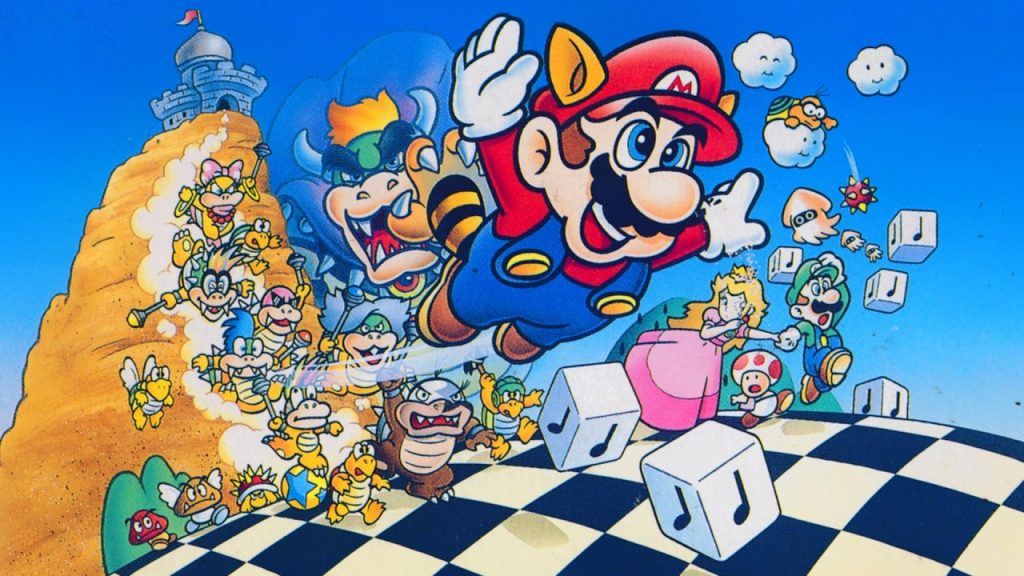
Originally released on: Famicom; later NES in other markets
Best for: Inventive platforming, varied power-ups, and replayable stages
Every replay reminds me how many ideas Super Mario Bros. 3 fits into one adventure. Its world map makes each stage feel part of a journey. New suits change how you move, and levels introduce tricks without letting them overstay their welcome.
It debuted in Japan in 1988, although many players associate it with later local releases. If the first Super Mario Bros. teaches the basics beautifully, this one shows how playful that foundation can become.
31. Mega Man 2 (1988, Famicom)
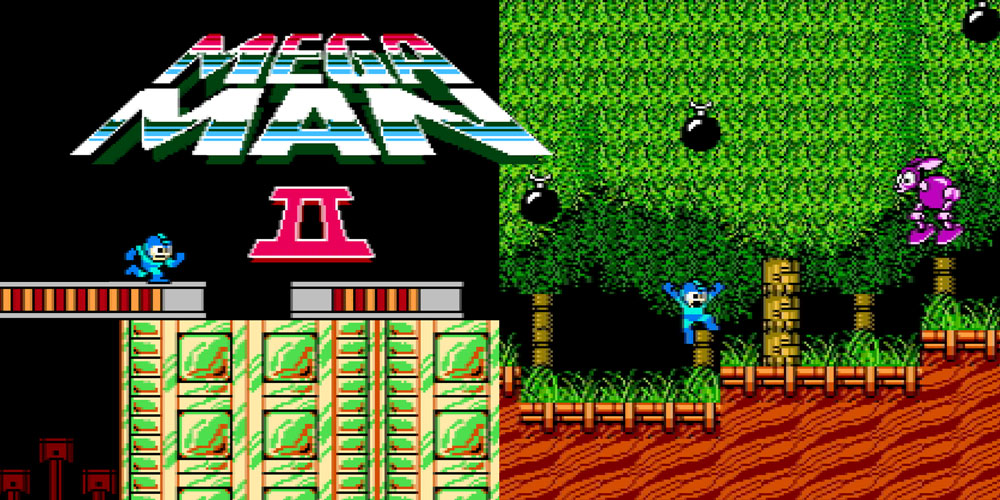
Originally released on: Famicom; later NES in other markets
Best for: First-time Mega Man players and boss strategies
If you want one 8-bit Mega Man game, I’d often start here. Mega Man 2 keeps the pleasure of choosing stages and earning boss weapons while giving its levels a more confident shape. I can picture a stage—and hear it—long after putting down the controller.
It’s still challenging, but failures tend to teach you something. Next time, you know where to wait, when to jump, or which weapon to try.
32. Wasteland (1988, Apple II)
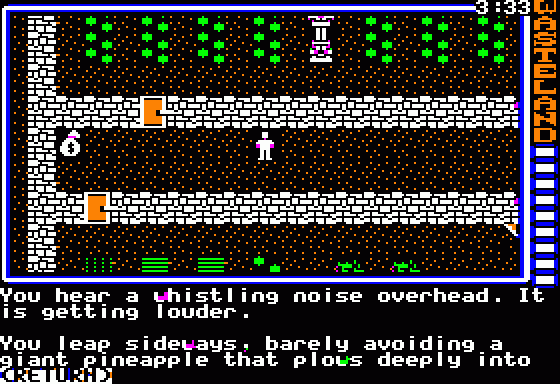
Originally released on: Apple II; other home-computer versions followed
Best for: Patient RPG players and consequential choices
Wasteland is one I’d approach with a notebook and time to spare. Its post-apocalyptic world gives your party problems to investigate and decisions with consequences beyond a single fight. Thinking carefully matters more than reacting quickly.
Its interface and pace take adjustment, so it isn’t my first suggestion for a casual evening. If you enjoy seeing how computer RPGs developed, though, its willingness to let choices shape the trip is worth the effort.
33. Altered Beast (1988, Arcade)
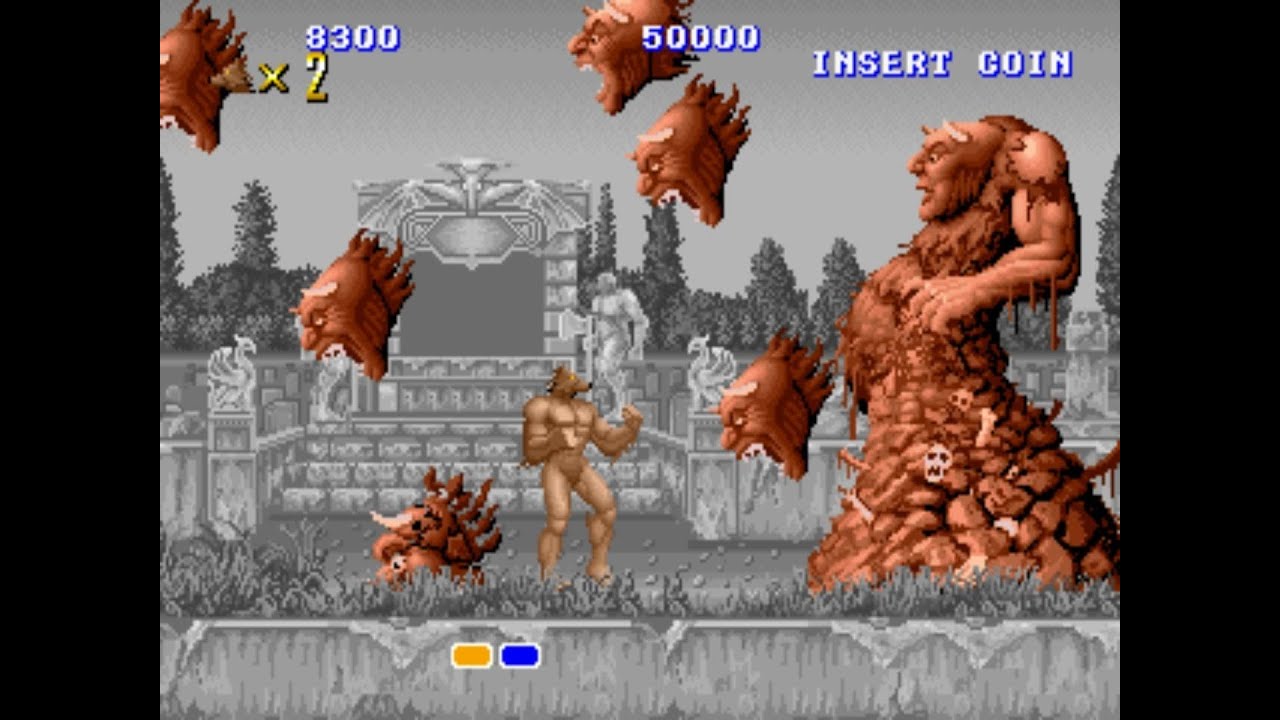
Originally released on: Arcade; later Genesis/Mega Drive
Best for: Sega arcade history, co-op, and outrageous transformations
Altered Beast knows the appeal of becoming something bigger and stranger. You fight through mythological settings, collect power-ups, and transform into beasts with new attacks. It’s theatrical arcade entertainment, right down to its memorable voice samples.
I’d include it with a caveat: its controls and repetition may not win over everyone today. Its place on this list comes from its distinctive personality and the way many players remember the Genesis/Mega Drive version. The arcade original came first, in 1988.
34. Double Dragon II: The Revenge (1988, Arcade)
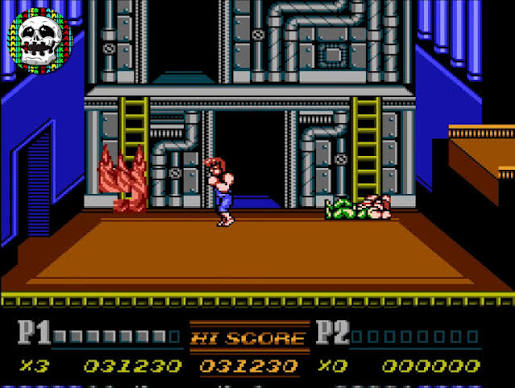
Originally released on: Arcade; a substantially different NES version followed
Best for: Co-op beat-’em-ups and comparing arcade and console versions
Double Dragon II sends Billy and Jimmy Lee into another run of crowded fights. With a second player, the appeal is immediate: move together, manage enemies approaching from both sides, and try not to waste an opening.
Version choice matters here. The 1988 arcade game and the later NES version share a title but differ substantially. If the NES game is the one you loved, seek out that version specifically; don’t assume an arcade release will recreate the same memories.
1989: Cities, Turtles, and Fantasy Brawls
35. SimCity (1989, Macintosh and Amiga)
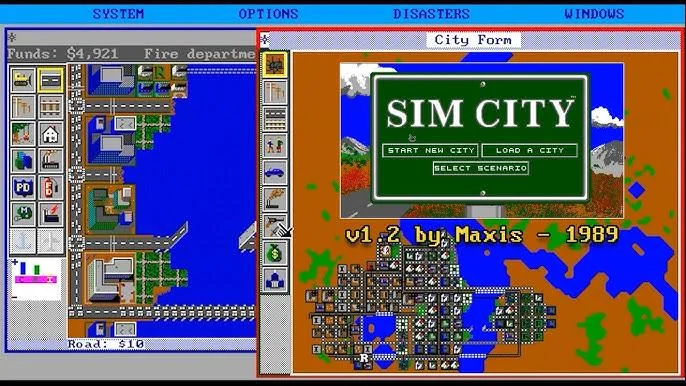
Originally released on: Macintosh and Amiga
Best for: Creative planning and “one more change” sessions
I’ve lost plenty of time to the thought that I’ll adjust one road in SimCity and then stop. A city grows, a problem develops, and I want to see what happens if I change the layout or budget.
Its early Macintosh and Amiga releases arrived in 1989. If you know later city builders, this is an enjoyable way to see their central appeal laid bare: make a plan, watch the city respond, and discover what the plan overlooked.
36. Prince of Persia (1989, Apple II)
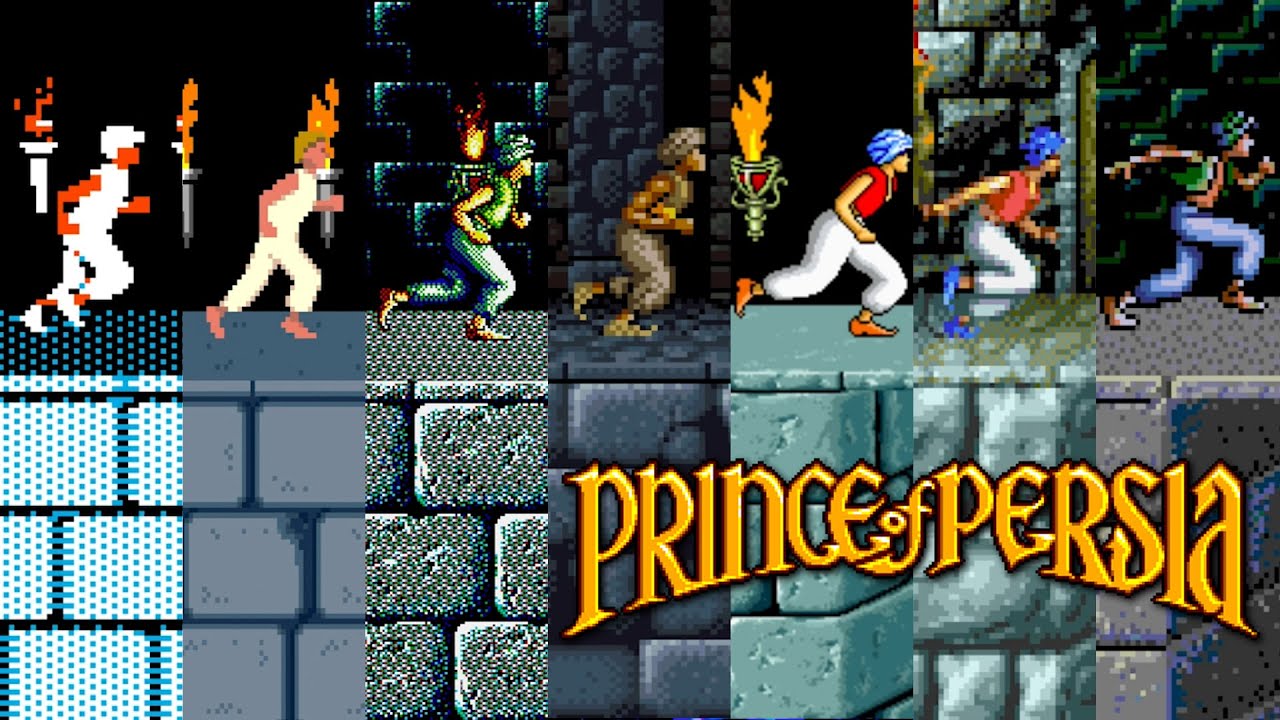
Originally released on: Apple II
Best for: Cinematic platforming and careful movement
Prince of Persia doesn’t move like a platformer built around instant response. Its animation gives running, climbing, and jumping weight. At first, I have to stop treating its controls like Mario. Soon, that deliberate movement becomes the source of the tension.
A corridor can turn into a small drama: a dangerous gap, a guard beyond it, and a clock reminding you not to wait forever. Give the controls time; they’re part of what makes the escape memorable.
37. Golden Axe (1989, Arcade)
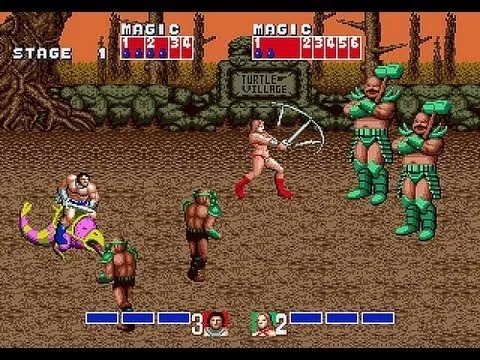
Originally released on: Arcade; home versions followed
Best for: Fantasy brawling and two-player arcade play
Pick a warrior, fight across a fantasy landscape, borrow a creature to ride, and decide whether this is the right moment to spend your magic. Golden Axe is direct arcade fun, particularly with someone beside you.
You may know it from Genesis/Mega Drive, but the arcade original arrived in 1989. For me, its appeal is that shared push forward: two players trying to keep an increasingly unruly screen under control.
38. Teenage Mutant Ninja Turtles (1989, Famicom)
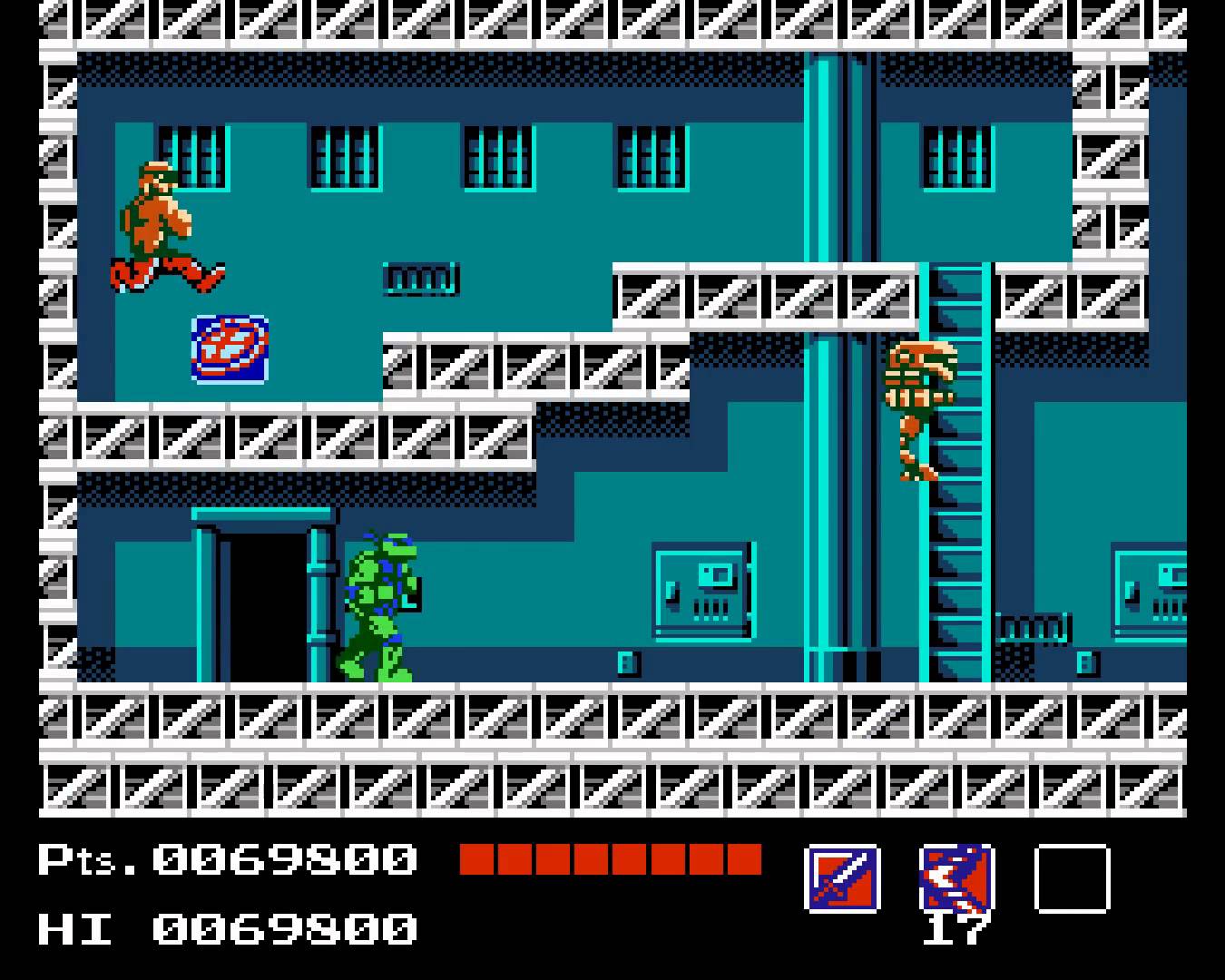
Originally released on: Famicom; later NES in North America
Best for: Tough NES action, Turtle-switching, and ambitious licensed games
The first Teenage Mutant Ninja Turtles home-console game isn’t the same experience as Konami’s better-known arcade brawler. This is an action-adventure where you switch between the four Turtles, navigate difficult areas, and live with the consequences when one is captured.
I have a soft spot for its ambition, even if some sections test my patience. It belongs here as a distinctive 1989 Famicom/NES game, not because every challenge feels perfectly judged. If you’re expecting arcade-style co-op, check which Turtles game you’ve found.
The Best Retro Games of the 1990s
The games from the 90s gave us more ways to play, not just better graphics. Home computers made room for larger adventures and strategy games, while consoles brought platformers, fighting games, and eventually 3D worlds into more living rooms. Some of these 90s video games feel familiar immediately; others are most rewarding when you slow down and accept that they play by older rules.
1990: New Worlds to Explore
39. Super Mario World (1990, Super Famicom)
Originally released on: Super Famicom; later SNES in other markets
Best for: Accessible platforming, secret exits, and exploration
Super Mario World welcomes you immediately but keeps rewarding curiosity. An alternate exit can change your route across the map. A level you thought you understood may hold another path. Yoshi makes familiar movements feel new.
I love the point where I stop treating a stage as a straight line and start asking what else it hides. Its Japanese Super Famicom debut places it in 1990, although players elsewhere may remember a later launch.
40. The Secret of Monkey Island (1990, MS-DOS)
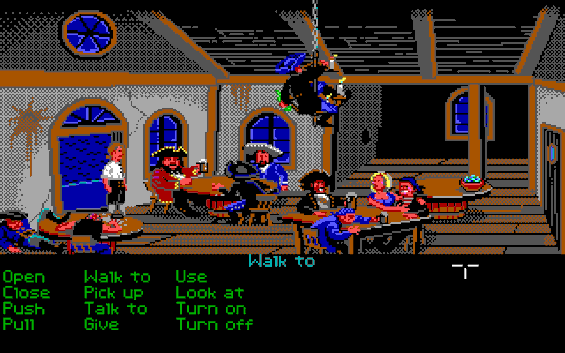
Originally released on: MS-DOS
Best for: Pirate comedy, dialogue, and point-and-click puzzles
A pirate adventure where talking is often more entertaining than fighting sounds like an unusual pitch, but it suits The Secret of Monkey Island. Its jokes, conversations, and places remain enjoyable even when I’m stuck on a puzzle.
Point-and-click adventures ask for a different mindset from action games. Look closely, listen to what characters say, and try unlikely ideas. Not every puzzle will match your logic immediately; that’s part of the genre’s charm and, sometimes, its frustration.
41. F-Zero (1990, Super Famicom)
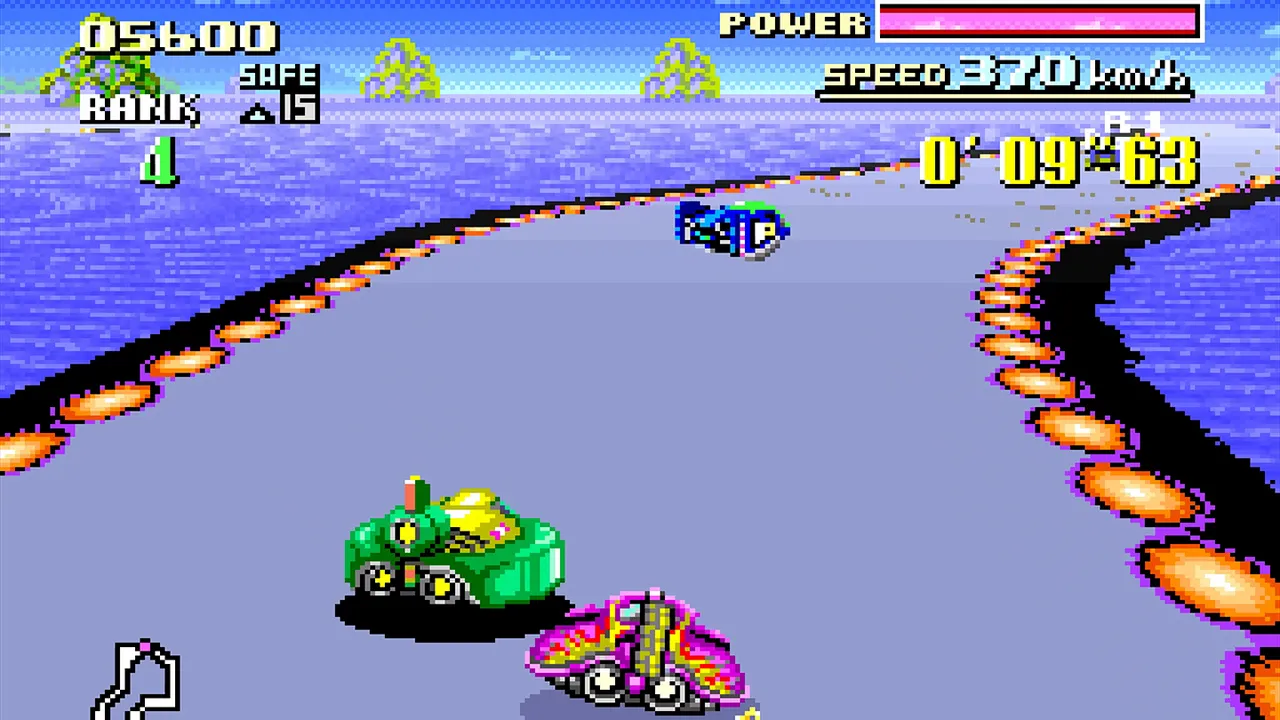
Originally released on: Super Famicom; later SNES in other markets
Best for: High-speed racing and learning clean lines
The first F-Zero gives you a futuristic race with little interest in letting you coast. Corners arrive quickly, rival vehicles crowd the track, and a clean lap feels earned. Its presentation still communicates speed remarkably well.
I enjoy it most when I stop blaming the course and notice where I’m turning too late. Nintendo dates its Japanese release to 1990, even if your first encounter was on a later SNES launch.
42. Metal Gear 2: Solid Snake (1990, MSX2)
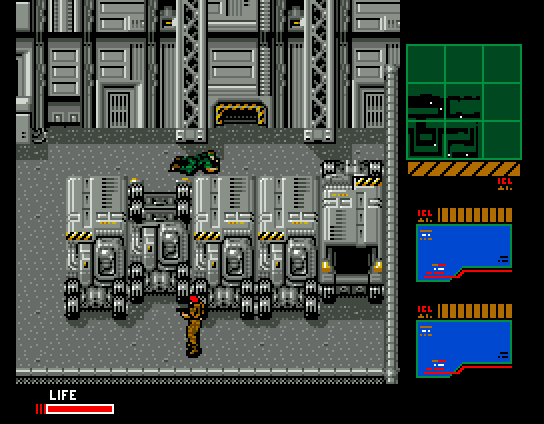
Originally released on: MSX2
Best for: Early stealth, observation, and Metal Gear history
Long before Metal Gear Solid reached PlayStation, Metal Gear 2: Solid Snake asked you to think about movement, enemy attention, and the value of not starting a fight. I enjoy the tension of watching a patrol and deciding when it’s finally safe to move.
Its MSX2 origins may surprise players who know the series only through later consoles. It isn’t as easy to approach as the PlayStation game, but it makes an interesting companion: you can see stealth ideas taking shape before the cinematic presentation became such a big part of the franchise.
1991: Speed, Rivalry, and Discovery
43. Sonic the Hedgehog (1991, Genesis/Mega Drive)
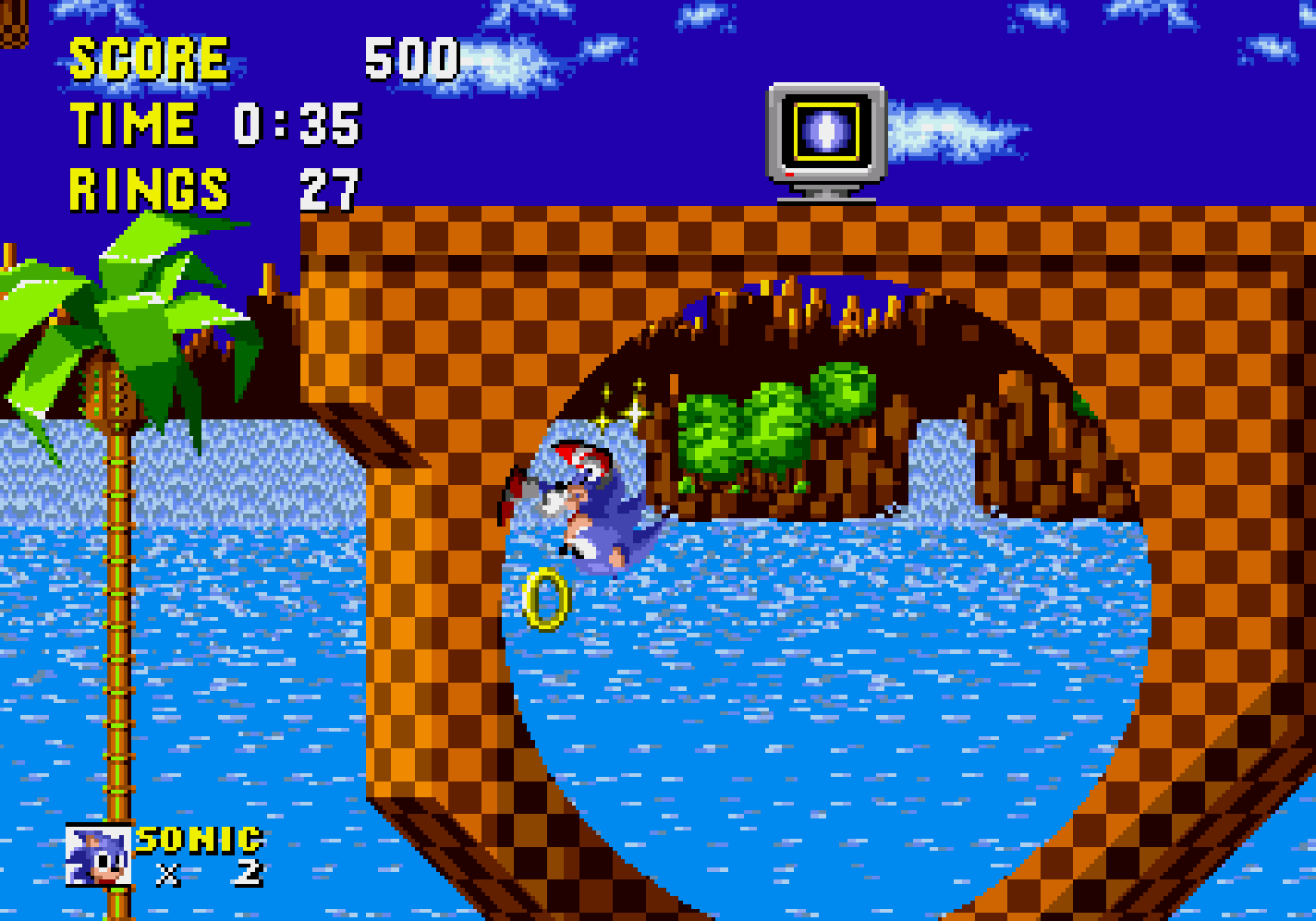
Originally released on: Genesis/Mega Drive
Best for: Speedy platforming and replaying branching routes
Sonic the Hedgehog sells speed, but I don’t think its best moments come from holding right and hoping for the best. A stage improves when you learn where to build momentum, where to slow down, and which route you want to take.
Its bright scenery and energetic presentation gave Sega’s platformer a character distinct from Mario’s. I’d tell a first-time player to explore. Knowing a stage is what eventually makes moving fast feel satisfying rather than chaotic.
44. Street Fighter II (1991, Arcade)
Originally released on: Arcade
Best for: Head-to-head competition and learning an opponent
It’s tempting to describe Street Fighter II through its recognizable fighters and special moves. For me, its lasting appeal is the conversation a match creates without anyone speaking. You jump too often; the other player notices. They rely on one approach; you begin waiting for it.
Find another beginner, learn a character’s basic attacks, and let the rivalry grow. Losing can be interesting when it shows you exactly what your opponent has figured out.
45. Lemmings) (1991, Amiga)
Originally released on: Amiga
Best for: Puzzle solving under pressure and creative planning
The little creatures in Lemmings keep marching whether you’ve worked out a safe route or not. You assign jobs—building, digging, blocking, and more—while trying to guide enough of them to the exit.
I love how it turns observation into pressure. Often I can see the solution forming, but I still have to act at the right moment. Its cheerful look disguises puzzles that can absorb an entire evening.
46. The Legend of Zelda: A Link to the Past (1991, Super Famicom)
Originally released on: Super Famicom; later SNES in other markets
Best for: Accessible Zelda adventures, dungeons, and secret hunting
A Link to the Past is often where I’d send someone who likes the idea of the original Zelda but wants a clearer introduction. Its world offers plenty to explore, while its dungeons and items give the journey a pleasing sense of direction.
It debuted in Japan in 1991, before its 1992 North American release. That date may look surprising if your memories come from a U.S. SNES cartridge. Either way, it’s one of my favorite games here for wandering off a planned route and finding something worthwhile.
1992: Rivalries Move into the Living Room
47. Super Mario Kart (1992, Super Famicom)
Originally released on: Super Famicom; later SNES in other markets
Best for: Split-screen rivalries and tight arcade racing
If you grew up with later Mario Kart games, the original can feel demanding. Tracks are tight, mistakes cost you, and a race asks for careful lines as much as quick reactions.
I’d choose a newer entry for an effortless party. I’d play Super Mario Kart to understand the series’ early character—and to rediscover how serious a friendly split-screen rivalry can become. The items bring humor; taking a corner well enough to hold a lead brings satisfaction.
48. Wolfenstein 3D (1992, MS-DOS)
Originally released on: MS-DOS
Best for: Fast first-person action and early PC shooter history
Wolfenstein 3D moves quickly and keeps its priorities plain: navigate corridors, find what you need, and survive the enemies ahead. Its spaces are simpler than those of later shooters, which makes it useful if you want to feel how early first-person action established momentum.
I wouldn’t promise every hallway will surprise a modern player. Approach it with historical curiosity as well as a taste for direct action, and its appeal becomes much easier to see.
49. Mortal Kombat) (1992, Arcade)
Originally released on: Arcade; home-console versions followed in 1993
Best for: Competitive arcade play and early-’90s fighting-game history
The digitized characters and theatrical violence made Mortal Kombat difficult to ignore. When I think about playing it, though, I also remember people trying to discover moves, swapping rumors, and hoping no one else knew a better tactic.
Its year needs clarifying: the arcade original arrived in 1992, while the well-known 1993 home releases brought the rivalry to living rooms. I’d play it alongside Street Fighter II, not instead of it. Their different approaches make the era more interesting.
1993: An Unusually Crowded Year
50. Doom (1993, MS-DOS)
Originally released on: MS-DOS
Best for: Fast first-person shooting, mods, and PC history
The quickest way to understand Doom is to play a level and notice how fast you begin making choices. Push toward supplies or hold your position? Search a side passage or keep moving? Its speed matters, but so do the spaces you gradually learn to navigate.
The Strong National Museum of Play also discusses its role in popularizing first-person shooters, alongside its approach to distribution, multiplayer, and modification. It’s a difficult game to leave out of PC history.
51. Myst (1993, Macintosh)
Originally released on: Macintosh
Best for: Quiet exploration, observation, and environmental puzzles
After Doom, Myst feels like taking a breath. You arrive somewhere beautiful and unsettling, then look for clues that might explain it. Rushing through its islands is a good way to miss what a sound, image, or machine is trying to tell you.
My advice is to keep notes. Its puzzles demand patience, but noticing a connection for yourself is the reward. The Strong’s history gives useful context for its success during the CD-ROM era.
52. Star Fox) (1993, Super Famicom/SNES)
Originally released on: Super Famicom/SNES
Best for: Early console 3D and replayable shooting routes
The first Star Fox doesn’t hide its chunky polygons, and I wouldn’t want it to. Its angular ships and landscapes belong to a particular moment in console history. More important, it’s still exciting to steer through a crowded encounter and come out intact.
Branching routes invite another trip, while the team chatter gives the journey warmth. If you know later entries, be ready for an earlier, rougher version of the idea.
53. Gunstar Heroes (1993, Genesis/Mega Drive)
Originally released on: Genesis/Mega Drive
Best for: Co-op run-and-gun action and inventive boss fights
Gunstar Heroes has the energy of a game delighted by its own possibilities. Weapons can be combined, bosses keep changing the challenge, and co-op play gives the screen a cheerful sense of barely controlled chaos.
I’d recommend it to someone who likes Contra but wants a different kind of surprise. Rather than merely repeating one successful pattern, I find myself adjusting to whatever new spectacle the game throws at us. It’s an excellent reminder that Sega’s 16-bit years were about more than Sonic.
54. Disney’s Aladdin) (1993, Genesis)
Originally released on: Genesis/Mega Drive; developed by Virgin Games
Best for: Expressive animation and movie-inspired platforming
When I recommend Aladdin, I have to ask which one. This is the 1993 Genesis game developed by Virgin Games, where swordplay and lively character animation give its version of Agrabah a distinct feel.
The 1993 SNES game was developed by Capcom and is a different platformer, not simply a port. Both have their fans. The Genesis version earns its place here for how much personality its movement and animation bring to each scene.
55. Super Street Fighter II: The New Challengers (1993, Arcade)
Originally released on: Arcade; SNES and Genesis/Mega Drive versions followed in 1994
Best for: Expanding your Street Fighter II roster and competitive play
If the original Street Fighter II is where I’d introduce a newcomer, Super Street Fighter II is where I’d go when that player wants more matchups to learn. New fighters—including Cammy, Fei Long, Dee Jay, and T. Hawk—give friends fresh reasons to revisit old rivalries.
The version in this year is the 1993 arcade game. If you remember a home cartridge, check its release date and edition: Capcom revised Street Fighter II more than once.
1994: One More Strong 16-Bit Year
56. Super Metroid (1994, Super Famicom/SNES)
Originally released on: Super Famicom/SNES
Best for: Exploration, atmosphere, and inventive routes
The great trick of Super Metroid is that returning to an old area rarely feels like going backward. New abilities change what you can do there, and your knowledge changes what you notice. A room you passed without a second thought may suddenly become the most interesting place on the map.
Its atmosphere matters just as much as its structure. I’d recommend it to anyone who enjoys looking closely, testing an idea, and finding their own way forward.
57. Donkey Kong Country (1994, SNES)
Originally released on: SNES
Best for: Rhythmic platforming, visual style, and secret hunting
People often begin with Donkey Kong Country’s pre-rendered look, which certainly stood out. On a replay, I’m more interested in how its stages move. Rolling through an enemy, bouncing into another jump, and keeping a run alive gives its platforming a satisfying rhythm.
Some sections require precision, and hunting every secret is a project of its own. You don’t need to uncover everything to enjoy the energy of its levels.
58. Final Fantasy VI (1994, Super Famicom)
Originally released on: Super Famicom; released as Final Fantasy III on SNES in North America
Best for: Character-driven RPGs and expansive 16-bit storytelling
Final Fantasy VI makes room for a large cast without asking you to care about everyone for exactly the same reason. Some scenes are funny, others painful, and quieter moments help the adventure feel bigger than a sequence of battles.
If you played it in North America as Final Fantasy III, you already know this game—that was its title there at the time. I’d give its story time to develop rather than judging it by its opening hour.
59. The Death and Return of Superman (1994, SNES)
Originally released on: SNES in 1994; Genesis version followed in 1995
Best for: DC Comics fans and solo superhero beat-’em-up action
Here’s a game I’d include with honest expectations. The Death and Return of Superman lets you play through a version of the famous comics storyline, with different Supermen appearing as the adventure progresses. That premise alone makes it interesting to superhero fans.
The brawling can grow repetitive, so it isn’t my first recommendation for someone seeking the decade’s finest beat-’em-up. And although the Genesis edition arrived in 1995, the SNES game came first in 1994.
1995: RPGs and Strategy Take the Lead
60. Chrono Trigger (1995, Super Famicom/SNES)
Originally released on: Super Famicom/SNES
Best for: RPG newcomers, time-travel stories, and memorable parties
When someone is interested in classic RPGs but nervous about slow pacing, I think of Chrono Trigger. Its time-travel story keeps offering new places and questions, while its party feels like people you want to spend an adventure with.
I appreciate how confidently it moves. Quiet moments have room to breathe without making me feel the game is waiting to become interesting. You don’t need a long history with older RPGs to care about what happens next.
61. Command & Conquer) (1995, MS-DOS)
Originally released on: MS-DOS
Best for: Real-time strategy and base-building under pressure
The pleasure of Command & Conquer lies partly in how quickly a sensible plan becomes a crisis. You gather resources, build a base, and prepare an attack. Then an enemy appears somewhere inconvenient, and every unit you committed elsewhere suddenly feels necessary at home.
I like pairing it with M.U.L.E. in conversation: one thrives on negotiation, while this one makes decisions urgent. Learning when to expand and when to defend is the heart of it.
62. Super Mario World 2: Yoshi’s Island (1995, Super Famicom/SNES)
Originally released on: Super Famicom/SNES
Best for: Playful platforming, egg-throwing, and illustrated worlds
Don’t approach Yoshi’s Island expecting Super Mario World with a different lead. Yoshi’s flutter jump and egg-throwing change how you move and how you solve a stage. I’m often thinking about where an egg might land as much as where Yoshi should go.
Its illustrated look fits that playful mood. There’s more precision involved than the cheerful presentation first suggests, especially when you decide to search a level thoroughly.
1996: New Ways to Move, Collect, and Feel Afraid
63. Super Mario 64 (1996, Nintendo 64)
Originally released on: Nintendo 64
Best for: 3D platforming and playful exploration
The first thing I want to do in Super Mario 64 is rarely a mission. I want to run, jump, climb, and see where I can get. That pleasure in movement makes its shift into 3D easy to appreciate, even if its camera can feel old-fashioned now.
The castle and courses reward curiosity. A familiar space might offer a different goal the next time you enter. I’d tell a newcomer to spend a while simply finding out what Mario can do.
64. Pokémon Red and Green (1996, Game Boy)
Originally released on: Game Boy in Japan; regional versions followed
Best for: Collecting, trading, and building your own team
My favorite part of the original Pokémon idea is how collecting leads to conversation. Which creatures did you find? What did a friend catch that you didn’t? Would you trade? The Game Boy games gave those questions a life outside the screen.
Red and Green debuted in Japan in 1996; players elsewhere may remember the later Red and Blue. The originals are less convenient than newer entries, but building a team still feels personal.
65. Resident Evil) (1996, PlayStation)
Originally released on: PlayStation
Best for: Survival horror and resource management
A door in Resident Evil is rarely just a way into another room. It’s a question: what’s on the other side, and have you brought enough supplies? Limited resources make exploration tense even when nothing is attacking you.
I’d warn a first-time player about its older movement and camera. They take adjustment. But if you want to understand survival horror, it’s worth meeting the original on its own terms. Deciding when not to fight is part of the experience.
1997: Big Worlds and Close Competition
66. Final Fantasy VII (1997, PlayStation)
Originally released on: PlayStation
Best for: Story-led RPGs and ambitious worlds
Final Fantasy VII has such a reputation that it can be difficult to sit down and simply play it. I’d suggest setting that reputation aside. Spend time with its characters, follow its world’s strange turns, and let quiet exchanges matter alongside the dramatic scenes.
Not every element has aged evenly, but its journey can still be absorbing. I revisit it less to confirm grand claims than to find the moments that remain personal.
67. Castlevania: Symphony of the Night (1997, PlayStation)
Originally released on: PlayStation
Best for: Castle exploration, character progression, and stylish action
I can enter Symphony of the Night intending to reach one place and end up elsewhere because a new ability made an old passage tempting again. That freedom is its greatest pleasure. The castle isn’t just a backdrop; it’s somewhere you gradually learn to read.
Combat, equipment, music, and visuals give it style, but curiosity is what keeps me there. If you enjoyed revisiting old spaces in Super Metroid, this offers a related pleasure in a different mood.
68. GoldenEye 007 (1997, Nintendo 64)
Originally released on: Nintendo 64
Best for: Objective-based missions and four-player split-screen
For many of us, GoldenEye 007 brings up the image of four people sharing one television. Split-screen matches could become serious business, complete with rules everyone considered fair until they lost.
Its single-player missions deserve attention too. Objectives beyond simply reaching an exit make you notice your surroundings. The controls may require patience today, but its appeal isn’t limited to multiplayer memories. The Strong’s profile covers both sides.
69. Tekken 3 (1997, Arcade)
Originally released on: Arcade; PlayStation version followed in 1998
Best for: 3D fighting, learning a favorite character, and local rivalries
Tekken 3 gives friends plenty of ways to disagree about who’s best. Its cast invites you to settle on a fighter, learn a few reliable moves, and discover that the person opposite you has learned how to counter them.
Many players associate it with the 1998 PlayStation release, including that version’s extra modes. The arcade game arrived earlier, in 1997, so it belongs here. If you’re choosing a version to revisit, know that the home release offers more than a straightforward copy of the cabinet.
1998: Adventures and Strategy Worth Lingering Over
70. The Legend of Zelda: Ocarina of Time (1998, Nintendo 64)
Originally released on: Nintendo 64
Best for: 3D adventure, dungeon puzzles, and a sense of place
Ocarina of Time gives you plenty to accomplish, yet some of my favorite moments are between objectives: reaching somewhere new, hearing its music, and wondering what lies beyond the visible path. Hyrule feels like somewhere to spend time.
The game also shows how Nintendo approached 3D adventure: movement, combat, and interacting with a larger world. Parts naturally show their age. Its combination of exploration and carefully built puzzles remains easy to recommend.
71. Half-Life) (1998, Windows PC)
Originally released on: Windows PC
Best for: Story-driven first-person action and environmental storytelling
Half-Life makes an impression by letting you arrive somewhere before everything goes wrong. Its setting feels like a place with a purpose, which makes the later chaos more compelling. The surroundings often tell you as much as a conversation would.
What I enjoy is the continuity of the trip. Even as the action changes, it feels as though I’m pushing through a connected place rather than finishing isolated challenges.
72. Metal Gear Solid) (1998, PlayStation)
Originally released on: PlayStation
Best for: Stealth, guard-pattern planning, and cinematic storytelling
A small room can be thrilling in Metal Gear Solid when you’re watching guard routes and trying to reach the other side unseen. You make a plan, take a few steps, and discover the plan needed work. I like that sneaking asks me to study a space before acting.
Its cinematic presentation gets plenty of attention, but some of its best moments come from the gap between what you intended and what happens once you move.
73. StarCraft) (1998, Windows PC)
Originally released on: Windows PC
Best for: Real-time strategy, distinct factions, and competitive play
Where Command & Conquer gives me the pleasure of reacting to a changing battle, StarCraft adds the satisfaction of learning how differently its factions operate. A plan that makes sense with one army won’t simply transfer to another.
That depth can be intimidating if you’ve never played a real-time strategy game. I’d start with the campaign and let it teach you what each side can do. Once the systems begin to make sense, even a loss can give you a clear idea to test next time.
1999: Fear, Freedom, and One More Run
74. Silent Hill (1999, PlayStation)
Originally released on: PlayStation
Best for: Psychological horror, atmosphere, and sound design
Silent Hill doesn’t need a monster in front of you to make a street uncomfortable. Fog limits what you can see, sounds suggest things you can’t locate, and the town keeps you uncertain about what lies ahead.
Its atmosphere is carefully built, not just a by-product of old graphics. The Strong National Museum of Play discusses how visibility and sound—including radio static that warns of nearby monsters—contribute to its unease.
75. System Shock 2 (1999, Windows PC)
Originally released on: Windows PC
Best for: Investigative horror, character-building, and resource management
System Shock 2 is one I’d recommend if you like feeling vulnerable while exploring. You search an unsettling space, piece together what happened, and decide how your character develops. Those choices help, but they don’t make the setting safe.
It asks more of you than a direct action game. Pay attention to resources, listen to the environment, and accept that you won’t solve every problem the same way. Investigation and unease are inseparable here.
76. Tony Hawk’s Pro Skater (1999, PlayStation)
Originally released on: PlayStation
Best for: Short sessions, score chasing, and mastering a route
A short run in Tony Hawk’s Pro Skater can become an entire evening. You spot a route, link a few tricks, miss a landing, and immediately want another chance. Improvement comes in small, satisfying steps.
You don’t need to know much about skateboarding to enjoy that loop. First, land one clean trick. Then learn how a level’s ramps, rails, and open spaces fit together. Before long, you and a friend are comparing scores.
Find Your Next Retro Game by Genre
If you don’t want to browse all 76 entries again, start with the kind of gaming experience you’re in the mood for:
- Classic action games: Try Contra, Gunstar Heroes, or Double Dragon II when you want quick reactions and a challenge you can share.
- Retro adventure games: The Legend of Zelda, A Link to the Past, and Ocarina of Time reward curiosity. If you prefer classic adventure games built around dialogue and puzzles, start with Maniac Mansion or The Secret of Monkey Island.
- Retro strategy games: Choose M.U.L.E. for negotiation, SimCity for building, or StarCraft for battles where decisions feel urgent.
- Retro fighting games: Start with Street Fighter II for arcade fundamentals, then try Mortal Kombat or Tekken 3 for a different kind of rivalry.
- Retro shooter games: Galaga and Gradius offer arcade shooting, while Wolfenstein 3D, Doom, and Half-Life show how classic shooter games changed on PC.
- Classic sports games: Track & Field turns athletics into a noisy contest; Tony Hawk’s Pro Skater makes landing a better run feel irresistible. They’re very different takes on retro sports games.
- Retro puzzle games: Tetris works when you have ten minutes, while Lemmings gives you a problem you may still be thinking about later.
You don’t need to play a genre in release order. Follow the game that sounds fun, then use the rest of the list to see where its ideas came from.
What Systems Are Represented in This Retro Games List?
This collection crosses several kinds of hardware. That matters because a game built for an arcade cabinet might encourage short, intense attempts, while a home-computer adventure can expect you to sit and think.
- Arcade cabinets: Pac-Man, Track & Field, Kung-Fu Master, Street Fighter II, and Tekken 3 are among the arcade originals here.
- Famicom, NES, and Famicom Disk System: Home to Super Mario Bros., Bomberman, Adventure Island, Castlevania, Mega Man, and the first console Teenage Mutant Ninja Turtles game.
- Super Famicom and SNES: Represented by Super Mario World, A Link to the Past, Chrono Trigger, Yoshi’s Island, and more.
- Genesis/Mega Drive: Sonic the Hedgehog, Gunstar Heroes, and Virgin Games’ Aladdin show different sides of Sega’s 16-bit library.
- Earlier home computers and PCs: The Atari 8-bit family, BBC Micro, Apple II, Commodore 64, Amiga, Macintosh, MSX2, MS-DOS, and Windows PCs all appear.
- Game Boy: Pokémon Red and Green brings handheld collecting and trading into the picture.
- Nintendo 64 and PlayStation: Their games show how differently developers approached 3D exploration, fighting, stealth, and horror in the late ’90s.
A retro game collection limited to one console would miss too much. The interesting part is seeing what designers did with the hardware—and the play habits—available to them.
Underrated Retro Games Worth Replaying
“Underrated” depends on who you ask. I wouldn’t call every game below a forgotten game or a rare classic game; some were well known in their day. They’re here because conversations about the greatest retro games can return to the same few titles, leaving other worthwhile experiences in the background. If you’ve already played the obvious picks, these are the ones I’d give another chance:
- M.U.L.E. (1983): Its negotiations are more fun when everyone at the table has a different plan.
- Boulder Dash (1984): A clever mix of puzzle thinking and split-second regret.
- Adventure Island (1986): Bright-looking platforming with a demanding rhythm.
- Maniac Mansion (1987): An odd, funny adventure if you’re willing to experiment.
- Metal Gear 2: Solid Snake (1990): A rewarding look at stealth before the PlayStation era.
- Lemmings (1991): Cute creatures, wonderfully stressful problems.
- Gunstar Heroes (1993): The game I’d hand to someone asking for a lively 16-bit co-op recommendation.
- System Shock 2 (1999): A strong choice when you want a place to investigate, not just enemies to defeat.
I’d include The Death and Return of Superman for a committed DC fan, too—but with more modest expectations about its moment-to-moment brawling.
Which Retro Games Have Aged Best?
If “aged best” means easy to understand and enjoyable without much historical homework, I’d point to:
- Tetris: Its rules are immediate; improvement remains absorbing.
- Pac-Man: Short sessions and readable dangers still work.
- Super Mario Bros. and Super Mario World: Both feel good to control, with World the gentler starting point.
- Street Fighter II: Especially enjoyable when two beginners learn together.
- Gunstar Heroes: Its co-op energy and constant invention keep it lively.
- Super Metroid: Exploration still rewards attention.
- Chrono Trigger: An inviting way into a longer RPG.
- Tony Hawk’s Pro Skater: Short attempts make progress easy to feel.
“Aged well” doesn’t mean “more important than everything else.” Elite, Myst, and the first Metroid ask for more adjustment, but that’s part of meeting them on their own terms.
The Essential Shortlist
Seventy-six games can be intimidating. If you’re new to retro gaming, these ten make a balanced starting collection. They cover different genres, eras, and systems without turning your first few weeks into homework.
| Game | Why Start Here? |
|---|---|
| Pac-Man (1980) | A clear introduction to arcade high-score play. |
| Tetris (1984) | A puzzle game you can understand almost immediately. |
| Super Mario Bros. (1985) | 8-bit platforming that teaches through play. |
| The Legend of Zelda (1986) | The pleasure of finding your own way. |
| Super Mario World (1990) | Welcoming platforming with plenty of secrets. |
| Street Fighter II (1991) | A head-to-head classic that’s great with a friend. |
| Doom (1993) | Fast PC action and a major piece of shooter history. |
| Gunstar Heroes (1993) | Inventive 16-bit action, especially in co-op. |
| Chrono Trigger (1995) | A friendly entry point to classic RPGs. |
| Super Mario 64 (1996) | The simple joy of moving around a 3D world. |
Swap freely. If Doom isn’t your kind of game, try Myst. If you’d rather compete than play co-op, replace Gunstar Heroes with Tekken 3. A good starting collection should lead you toward your tastes, not demand that you share mine.
Where Should You Start?
Don’t start with the game you feel you’re supposed to admire. Start with the kind of experience you already enjoy:
- For ten spare minutes: Tetris, Pac-Man, or Dig Dug.
- For platforming: Super Mario World, Adventure Island, or Genesis Aladdin.
- For action with a friend: Contra, Gauntlet, or Gunstar Heroes.
- For a rivalry: Street Fighter II, Super Mario Kart, or Tekken 3.
- For a longer adventure: A Link to the Past, Chrono Trigger, or Ocarina of Time.
- For thoughtful exploration: Super Metroid, Maniac Mansion, or Myst.
- For horror: Resident Evil if you enjoy managing supplies; Silent Hill if you’d rather be unsettled by the journey itself.
Give older controls a little time without forcing yourself through a game you aren’t enjoying. Respecting retro game history doesn’t mean treating every classic like homework.
FAQ About the Best Retro Games
What counts as a retro game?
There’s no universally agreed cutoff. For this list, it means a game or distinct version first released between 1980 and 1999, whether it began in an arcade, on a home computer, on a handheld, or on a console.
Why is Bomberman listed in 1985 if there was a 1983 game?
This entry specifically recommends the 1985 Famicom game, which expanded on an earlier 1983 Hudson Soft computer game. The two are related, but the 1985 version is the one being discussed here.
Why are Castlevania and Mortal Kombat listed earlier than I remember?
The first Castlevania debuted on Japan’s Famicom Disk System in 1986; its North American NES release came in 1987. Mortal Kombat began in arcades in 1992 before reaching home systems in 1993. This list uses first-release years while acknowledging later versions.
Was The Death and Return of Superman released in 1994 or 1995?
Both dates refer to different versions. The SNES game arrived in 1994; the Genesis version followed in 1995. Because the list is organized by first release, the game appears under 1994.
Is the NES Teenage Mutant Ninja Turtles the same as the arcade game?
No. The 1989 Famicom/NES game here is a home-console action-adventure. Konami also made a separate Teenage Mutant Ninja Turtles arcade beat-’em-up. If you remember playing co-op at an arcade cabinet, you’re thinking of that other game.
Which Aladdin game is on this list?
The entry is Virgin Games’ 1993 Genesis/Mega Drive platformer. Capcom developed a separate Aladdin game for the SNES in 1993. They share a movie and a title, but they aren’t identical versions of the same game.
Is Tekken 3 a 1997 or 1998 game?
It debuted in arcades in 1997 and came to PlayStation in 1998. The PlayStation version also added content, so it’s worth checking which version you’re choosing to play.
Is abandonware a legal way to play old games?
“Abandonware” is an informal label people use for older software that is no longer actively sold or supported. It doesn’t mean a game is automatically in the public domain or free to download. If you’re looking for an old PC game, check for an official re-release, a publisher-authorized download, or a legitimate collection first.
The U.S. Copyright Office explains that copyright can protect works whether or not they’re currently published. Availability and copyright status are separate questions.
Do I need an original console to enjoy these games?
No. Original hardware can be appealing, but it isn’t required. Some titles have official modern editions or compilations; availability depends on the game and your region. Check which version a collection includes before buying, since arcade originals, console releases, and remakes may feel different.
Final Thoughts
The fun of revisiting old school video games is finding out how differently they ask you to play. Pac-Man wants one more round. M.U.L.E. wants a roomful of people with competing plans. Maniac Mansion wants you to try a strange idea. Gunstar Heroes barely wants you to catch your breath.
You don’t have to love all 76 games. Pick one that sounds right for tonight, give its original design a fair chance, and follow whatever catches your interest next. That’s how a retro games list becomes a collection of favorites that feels like your own.
You May Also Like
 Computers & PC Games
Can You Unlock FF Beta? APK Risks and Safe Access
 Computers & PC Games
13 Fun Games Like Wordle and Connections to Play Daily
 Computers & PC Games
Is Minecraft Dungeons Cross-Platform? Here’s How It Works
 Computers & PC Games
8 Best Valheim Server Hosting Providers in 2026
 Computers & PC Games
How Much RAM Do You Need for a Minecraft Server?
 Computers & PC Games