

In the United States, Fortnite Battle Royale is rated T for Teen by the ESRB, which generally means it is suitable for players ages 13 and older.
That answer sounds simple, but parents often need more context. A child under 13 may still be able to use Fortnite through an Epic Cabined Account, which limits certain features until the required consent process is completed or the player reaches the applicable age.
There is another detail that can make Fortnite’s age rating confusing. Fortnite contains many different experiences, and published islands can have their own age and content ratings.
So the practical question is not only, “How old do you have to be to play Fortnite?” It is also about which part of Fortnite your child wants to play, who they will communicate with, how much time they will spend gaming, and whether they can follow the rules you set at home.
Quick answer: Fortnite Battle Royale is rated T for Teen by the ESRB and generally suitable for ages 13 and older. Younger children may still be able to access Fortnite through a Cabined Account, but some features can be restricted. Parents should also check the rating for the specific Fortnite experience.
How Old Do You Have to Be to Play Fortnite?

The ESRB rates Fortnite Battle Royale T for Teen in the United States. The ESRB generally uses the Teen category for content it considers suitable for people ages 13 and older.
That rating describes the game’s content. It does not automatically prevent every younger player from accessing Fortnite.
Epic uses the age information connected to an account to apply age-related restrictions. Younger players may receive a Cabined Account with some features disabled.
The distinction between the game rating and account restrictions matters. A child can have restricted account features while the game itself keeps its Teen rating.
| Question | Answer |
|---|---|
| What is Fortnite Battle Royale’s U.S. rating? | ESRB T for Teen |
| What age does the Teen rating generally cover? | Ages 13 and older |
| Can a child under 13 use Fortnite? | They may be able to with a Cabined Account and feature restrictions |
| Are all Fortnite islands rated Teen? | No. Published islands can have their own ratings |
| Can parents manage access? | Yes. Epic provides controls for experiences, communication, purchases, and play time |
What Does Fortnite’s Teen Rating Mean?
The ESRB’s T for Teen rating means Fortnite Battle Royale is generally considered suitable for ages 13 and older based on its content.
The ESRB listing includes:
- Lyrics
- Suggestive Themes
- Violence
It also lists Users Interact and In-Game Purchases as interactive elements. These labels give parents additional information about online interaction and spending.
| ESRB Information | What It Means |
|---|---|
| Lyrics | Some song lyrics contributed to the rating |
| Suggestive Themes | The game contains some suggestive material |
| Violence | Combat and weapon-based violence are part of Battle Royale |
| Users Interact | Players can interact with other users |
| In-Game Purchases | Players can purchase digital goods or content |
Battle Royale involves collecting supplies and fighting to be the last player or team standing. The ESRB rating summary also mentions shooting, gunfire, colorful explosions, and defeated enemies disappearing in bursts of pixels.
Parents can use the rating as a starting point rather than a final answer. A child’s maturity, the specific experience they want to play, online communication, and purchase settings can all affect the decision.
What Is the Average Age of Fortnite Players?
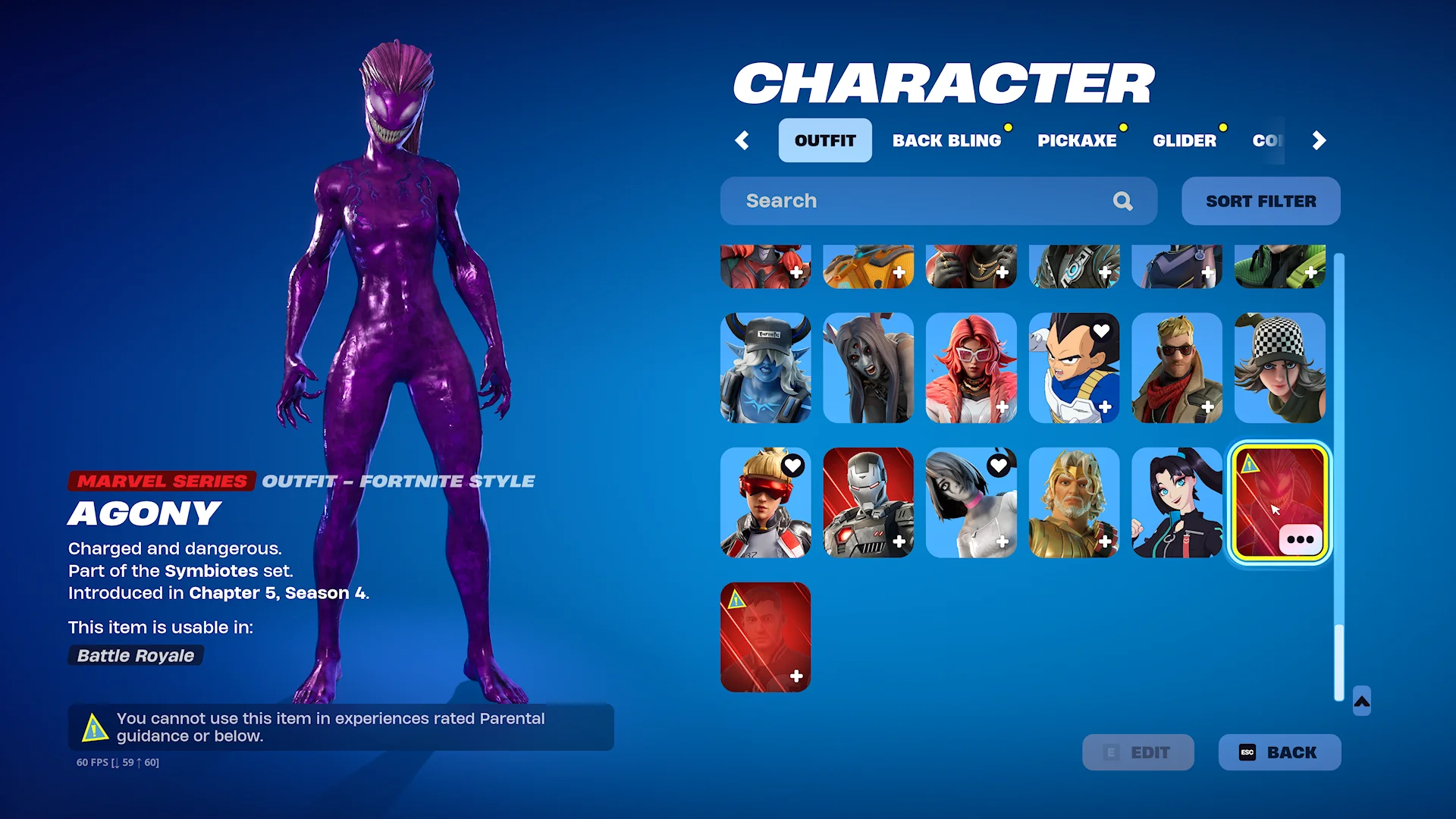
The ESRB rating does not tell us the average age of Fortnite players.
An age rating describes the content of a game. It does not measure the age of the people who play it.
That distinction matters because parents may see young children playing Fortnite and assume that the Teen rating no longer matters. The opposite assumption can also cause confusion: a Teen rating does not mean every Fortnite player is 13 or older.
Fortnite has a broad player base, so the more useful question for a parent is whether a specific child is ready for the particular experience they want to play.
What Age Is Fortnite Appropriate For?
The official U.S. ESRB rating for Battle Royale is T for Teen, generally suitable for ages 13 and older.
Parents can then consider how their own child handles competition, online communication, limits, and the game’s content.
Look at more than the child’s age
Age provides a useful starting point, but it does not tell the whole story.
Some younger children may understand the difference between a game and real life, follow household rules, and stop playing without a major argument. An older child may still struggle with limits or become so focused on gaming that other parts of daily life suffer.
Check whether your child can handle the game
Before allowing a younger child to play, consider:
- Content: Is the child comfortable with stylized combat and weapons?
- Self-control: Can they stop when the agreed time ends?
- Communication: Do they understand why they should not share personal information with strangers?
- Purchases: Can they follow rules about V-Bucks and other purchases?
- Experience selection: Can they stay within the content you approve?
- Online behavior: Do they know how to mute, block, and report another player?
These questions can tell you more about readiness than age alone.
What Does Fortnite Feel Like From a Parent’s Perspective?
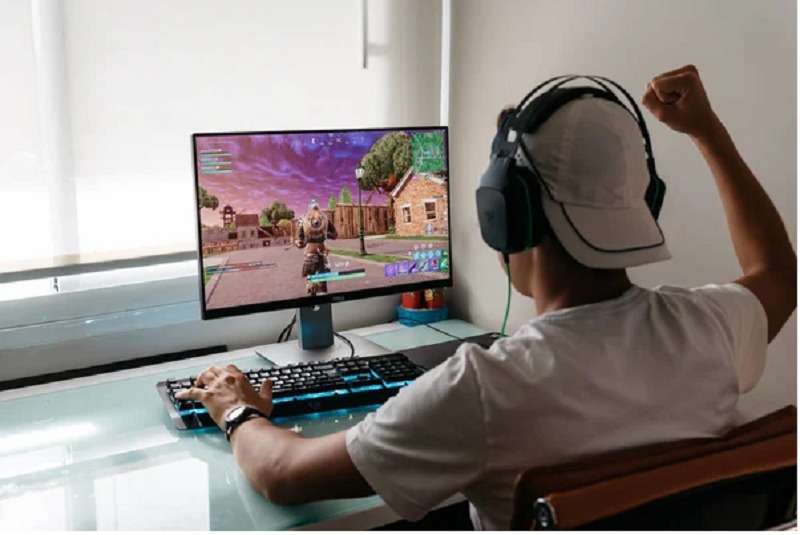
Fortnite is more than a game that a child can start and stop whenever they want. It is a social online game, and that changes the parenting equation.
Why stopping a live match can be difficult
Fortnite matches happen in real time. A child cannot simply pause the battle when dinner is ready or when you want them to finish their homework.
That can create a familiar conversation:
“Just let me finish this match.”
Sometimes that request is reasonable. Parenting guidance from BBC Bitesize notes that live matches can make sudden stopping difficult and suggests giving a warning before the end of a gaming session or agreeing that the child can finish the current battle.
Why friends can make the situation harder
A child may also resist stopping because friends are still online. In that moment, the argument may not really be about Fortnite. It may be about not wanting to feel left out.
That is why a predictable rule can work better than a last-minute demand.
For example, you could say:
“You have until 7:30. If you are already in a match, finish that match and then you’re done.”
The exact rule can vary by family. The important part is deciding it before the conflict starts.
How Can Parents Set Fortnite Screen-Time Rules?
Set the rule before the gaming session begins.
Epic provides time-management tools, and parents can also create household rules around gaming. BBC Bitesize’s parenting guidance recommends open conversations about a child’s time online and notes that Fortnite offers time-limit controls.
Make the stopping point predictable
- Set a start time.
- Agree on an end time.
- Give a warning before the end.
- Allow the current match to finish when practical.
- Keep the rule consistent.
Connect gaming with the rest of the day
Gaming does not have to compete with every other activity. You can place Fortnite after homework, chores, outdoor time, family activities, or other responsibilities.
This approach also makes it easier to explain that Fortnite is one part of the day, not the entire schedule.
The goal is not to make every gaming session stressful. Clear expectations give both parents and children a better idea of what comes next.
What Should Parents Do About Fortnite Chat?
For younger players, communication settings deserve serious attention.
Depending on the account and settings, children can encounter teammates or other players they do not know. Parents should explain that an online avatar may not tell the whole story about the person behind it.
BBC Bitesize’s parenting guidance recommends talking with children about why it can be safer to limit communication with people they do not know. It also suggests teaching children not to share personal information such as their name, age, or contact details.
Teach the basic safety rules
A simple conversation can cover the essentials:
- Do not share your real name with strangers.
- Do not share your address, school, phone number, or other personal details.
- Leave a conversation when someone makes you uncomfortable.
- Mute, block, or report inappropriate players.
- Tell a parent or another trusted adult when something feels wrong.
Practice these tools before your child needs them. Knowing how to respond ahead of time can make a stressful situation easier to handle.
Can Parents Turn Off Fortnite Voice and Text Chat?
Yes. Epic provides voice and text communication controls that can restrict or turn off chat, depending on the account and settings.
Parents can also control who the child can communicate with.
For a younger child, restricting communication with people they do not know can provide an additional layer of protection. You can revisit the setting later as the child becomes more comfortable with online interaction and demonstrates responsible behavior.
What About Fortnite Purchases and V-Bucks?
Fortnite is free to download and play, but the game also offers paid items and services.
Players can purchase V-Bucks and use them for digital content such as outfits and other items. Battle Pass-related purchases can also encourage children to ask for additional spending money.
BBC Bitesize’s parenting guidance recommends discussing purchases and using parental controls to help manage spending.
Set a simple purchase rule
For younger children, a straightforward rule can work well:
“You need to ask before buying anything.”
Parents should also review payment information stored on the Epic account and the gaming platform. Keeping those settings under control can reduce the chance of an unexpected purchase.
Does Fortnite Have Parental Controls?
Yes. Epic provides parental controls for several important parts of Fortnite and UEFN.
| Control | What Parents Can Manage |
|---|---|
| Experience ratings | Limit access to experiences above a selected rating |
| Voice and text chat | Restrict or turn off communication |
| Purchases | Manage or require approval for purchases |
| Play time | Set limits and review available reports |
These controls work best when children also understand the reason behind the rules. Open conversations remain an important part of helping children stay safer online.
Can Parents Limit Fortnite Experiences by Age Rating?
Yes. Parents can set an experience rating limit and require a PIN to unlock experiences above that limit.
This is useful because Fortnite contains many different experiences with different content.
Can Parents Limit Fortnite Play Time?
Yes. Epic offers time limits and time reports for Fortnite and UEFN.
Parents can use those tools alongside household rules to create a more predictable gaming schedule.
Can Parents Restrict Fortnite Purchases?
Yes. Parents can use Epic’s purchase controls and should also check the settings on the child’s gaming platform.
Does Every Fortnite Mode or Island Have the Same Rating?
No. Fortnite Battle Royale and Save the World have ESRB Teen ratings, while published Fortnite islands can have their own age and content ratings.
| Fortnite Content | Rating Information |
|---|---|
| Battle Royale | ESRB T for Teen |
| Save the World | ESRB T for Teen |
| Other published islands | Each island can display its own rating |
| Creative and UEFN | Parents can manage access to these experiences and tools |
This matters because a child may use “Fortnite” to describe several very different experiences.
Epic also notes that users can encounter content during the design process in UEFN that has not gone through publication moderation or received a published rating.
Check the specific experience rather than assuming every Fortnite island has the same content.
Can a Child Under 13 Play Fortnite?
A child under 13 may be able to use Fortnite, but younger accounts can have significant restrictions.
Epic says a player may receive a Cabined Account when the player is under 13 or below the age of digital consent in their country, whichever is higher.
Epic may ask for a parent or guardian’s email address during the consent process. While waiting for consent, the child can still access some Fortnite content, but certain features remain unavailable.
Epic lists restrictions that can include:
- Voice chat and free text chat being disabled
- Real-money purchases being disabled
- Some account-linking features being disabled
- Custom display names being disabled
- Some recommendations, emails, and notifications being disabled
The key distinction remains the same: account restrictions do not change the game’s ESRB rating. They determine which features a younger player can access through the account.
What Effects Should Parents Watch For?
Parents sometimes look for a simple answer to a question like, “Is Fortnite bad for children?” A more useful approach is to watch how your own child responds to gaming.
Look at the child’s overall routine
Pay attention when Fortnite regularly starts affecting other parts of daily life:
- Difficulty stopping: Your child repeatedly argues when gaming time ends.
- Constant preoccupation: Fortnite becomes the main topic of conversation throughout the day.
- Sleep disruption: Gaming regularly pushes bedtime later.
- Neglected responsibilities: Homework, chores, exercise, or family activities keep getting pushed aside.
- Strong emotional reactions: Losing or stopping the game regularly leads to unusually intense frustration.
- Less balance: Gaming replaces most other social, family, or outdoor activities.
Do not treat one sign as a diagnosis
These behaviors do not automatically prove addiction or a mental health problem. They are reasons to step back and look at the overall pattern.
A particularly useful question is whether your child can enjoy Fortnite and then move on to another activity when the agreed time ends.
A child who can follow the rules and maintain a balanced routine is in a different situation from a child whose schoolwork, sleep, relationships, or daily responsibilities consistently suffer because of gaming.
What If My Child Gets Angry When I Tell Them to Stop?
Give your child advance notice rather than ending the session without warning.
Because Fortnite uses live matches, stopping can feel more disruptive than stopping a single-player game that can pause at any time.
Try a predictable routine
- Give a warning: “You have 15 minutes left.”
- Give a final warning: “This is your last match.”
- Let the current match finish when practical.
- Follow the agreed rule.
BBC Bitesize’s guidance similarly recommends advance warnings and planning around the end of a live battle.
Let your child be disappointed
Your child may still feel frustrated when gaming ends. That is normal. You can acknowledge the feeling without changing the rule every time the child protests.
Consistent boundaries make the routine easier to understand over time.
How Can Parents Use Fortnite in a More Balanced Way?
Fortnite does not have to be an all-or-nothing activity.
A simple daily routine can give gaming a clear place without allowing it to take over the entire schedule.
| Part of the Day | Example |
|---|---|
| Responsibilities | Homework, chores, or other agreed tasks |
| Physical activity | Outdoor play, sports, walking, or another activity |
| Family time | Meals, conversation, or shared activities |
| Gaming | Play within the agreed time limit |
| Wind-down | Stop early enough to prepare for bedtime |
BBC Bitesize’s parenting guidance also emphasizes making time for outdoor activities, family, and friends rather than allowing gaming to consume all of a child’s free time.
The goal is not to label Fortnite as good or bad. The goal is to keep gaming in balance with the rest of a child’s life.
How Should Parents Talk to Children About Fortnite?
Start the conversation before there is a problem.
You do not need to wait until your child receives an upsetting message or refuses to stop playing. Make online safety part of normal conversations about gaming.
Ask simple questions
- “Who do you usually play with?”
- “Are you talking to people you know in real life?”
- “What do you do when another player is rude?”
- “Do you know how to block or report someone?”
- “What should you do if someone asks for personal information?”
- “What time does gaming end today?”
These questions can tell you much more about your child’s Fortnite experience than simply watching them play.
Make it easy to ask for help
Children should know that they can come to you when something online makes them uncomfortable.
That message is worth repeating regularly:
“If someone says something that makes you uncomfortable, you can always tell me. You won’t get in trouble for asking for help.”
Giving children a safe way to report problems can make them more likely to speak up when they need support.
What Should Parents Check Before a Child Plays Fortnite?
- Check the rating. Review the ESRB information for Battle Royale or the rating shown for the specific island.
- Check the account. Make sure the child’s age information and account status are correct.
- Review parental consent. Complete the required process for a younger account.
- Set an experience limit. Choose the rating level that fits your family’s rules.
- Review communication. Decide whether voice and text chat should be available.
- Set purchase rules. Decide whether your child must ask before buying anything.
- Set play-time rules. Agree on when gaming starts and ends.
- Teach safety tools. Make sure your child knows how to mute, block, and report other players.
- Check in regularly. Ask what they are playing and who they are talking to.
These steps give parents something more useful than a simple age number. They create a framework for deciding whether Fortnite fits your family and how your child can use it more safely.
How Should Parents Compare Battle Royale With Other Fortnite Islands?
The simplest approach is to check the specific experience your child wants to play.
| What to Check | Battle Royale | Other Published Islands |
|---|---|---|
| Age rating | ESRB T for Teen | Check the rating shown for the island |
| Content | Weapon-based combat is part of the experience | Content varies |
| Online interaction | Players interact with others | Review the specific experience and communication settings |
| Access controls | Rating limits can restrict access | A PIN can be required for experiences above the selected limit |
This simple comparison can prevent one of the most common misunderstandings about Fortnite: assuming that every experience on the platform carries the same rating.
Frequently Asked Questions About Fortnite’s Age Rating
Is Fortnite rated 13+ in the United States?
Fortnite Battle Royale is rated T for Teen by the ESRB and generally suitable for ages 13 and older.
What is the average age of Fortnite players?
The ESRB rating does not provide an average age for Fortnite players. It is a content rating, not a demographic measure.
Can a 10-year-old play Fortnite?
A 10-year-old may be able to access Fortnite, but Battle Royale remains ESRB-rated T for Teen. A younger player may use a Cabined Account with certain features restricted.
Is Fortnite good for 10-year-olds?
That depends on the child and the specific experience. Because Battle Royale is rated T for Teen, parents should review the content, account controls, communication settings, and the child’s ability to follow limits.
Can an 11-year-old play Fortnite?
An 11-year-old may be able to access Fortnite with the restrictions that apply to younger accounts. Battle Royale remains ESRB-rated T for Teen.
Can a 12-year-old play Fortnite?
A 12-year-old may be able to access Fortnite, but Battle Royale remains rated T for Teen. Being close to 13 does not change the ESRB rating.
Can a child under 13 play Fortnite?
They may be able to. Epic can place younger players in a Cabined Account with restrictions on features such as chat and purchases.
What age is Fortnite appropriate for?
The ESRB generally considers Battle Royale appropriate for ages 13 and up. Parents should also consider maturity, self-control, online communication, and the specific experience.
Is every Fortnite island rated Teen?
No. Published Fortnite islands can have their own age and content ratings.
Can parents restrict higher-rated Fortnite experiences?
Yes. Parents can set an experience rating limit and require a PIN for experiences above that limit.
Can parents turn off Fortnite voice and text chat?
Yes. Epic provides communication controls that can restrict or turn off voice and text chat, subject to the account settings.
Can parents limit Fortnite purchases?
Yes. Epic provides purchase controls, and parents should also review the settings on the child’s gaming platform.
Can parents limit Fortnite play time?
Yes. Epic offers time limits and time reports for Fortnite and UEFN.
What should I do if my child refuses to stop playing Fortnite?
Set the stopping rule before the gaming session begins. Give advance warnings and, when practical, allow the current match to finish before ending play.
Should I let my child use Fortnite voice chat?
That depends on your child’s age, maturity, and who they play with. For younger children, limiting communication with people they do not know can provide an additional layer of protection.
Should I be worried if my child plays Fortnite every day?
Not necessarily. Look at how gaming affects sleep, schoolwork, responsibilities, family time, physical activity, mood, and the child’s ability to stop.
Is the ESRB Teen rating a legal minimum age?
No. The ESRB rating is a content-rating guide, not by itself a legal minimum age. Epic’s account system can apply separate age-related restrictions.
Final Answer: How Old Do You Have to Be to Play Fortnite?
In the United States, Fortnite Battle Royale is rated T for Teen by the ESRB and generally considered suitable for ages 13 and older.
That number provides a useful starting point, but parents should look beyond the rating when deciding whether Fortnite fits their child.
Consider the child’s maturity, ability to stop playing, online communication, purchase habits, and the particular Fortnite experience they want to access.
A child under 13 may still be able to use Fortnite through an Epic Cabined Account, although some features can remain restricted. Parents can also manage experience ratings, communication, purchases, and play time.
Fortnite’s social design also matters. Live matches can make stopping difficult, and friends can create pressure to keep playing. A predictable schedule and advance warnings can make those situations much easier to manage.
It is also worth watching the child’s overall routine. Problems arise when gaming consistently interferes with sleep, schoolwork, responsibilities, family time, physical activity, or the child’s ability to stop.
The best answer is not simply “yes” or “no.” For Battle Royale in the U.S., the official ESRB rating is 13 and up, while a responsible family decision also considers the child, the content, the account settings, and the way Fortnite fits into everyday life.
For the latest details, review the ESRB’s Fortnite Battle Royale rating and Epic’s parental controls guide.
You May Also Like
 Computers & PC Games
FM27 Best Settings for FPS: How to Fix Low FPS, Lag, and Stuttering on PC
 Computers & PC Games
Hostinger Minecraft Server Hosting Review: Plans, Pricing, and Mod Support
 Computers & PC Games
How Big is Fortnite? GB Size & Space Does Fortnite Take Up
 Computers & PC Games
10 Best Modded Minecraft Server Hosting Providers for 2026
 Computers & PC Games
GTA 6 System Requirements: Minimum & Recommended PC Specs (Predicted)
 Computers & PC Games
